Reading armchair: what to look for in the seat, the back, the arms and the light
By Lucy Home. Published 14/11/2026, updated 14/11/2026.
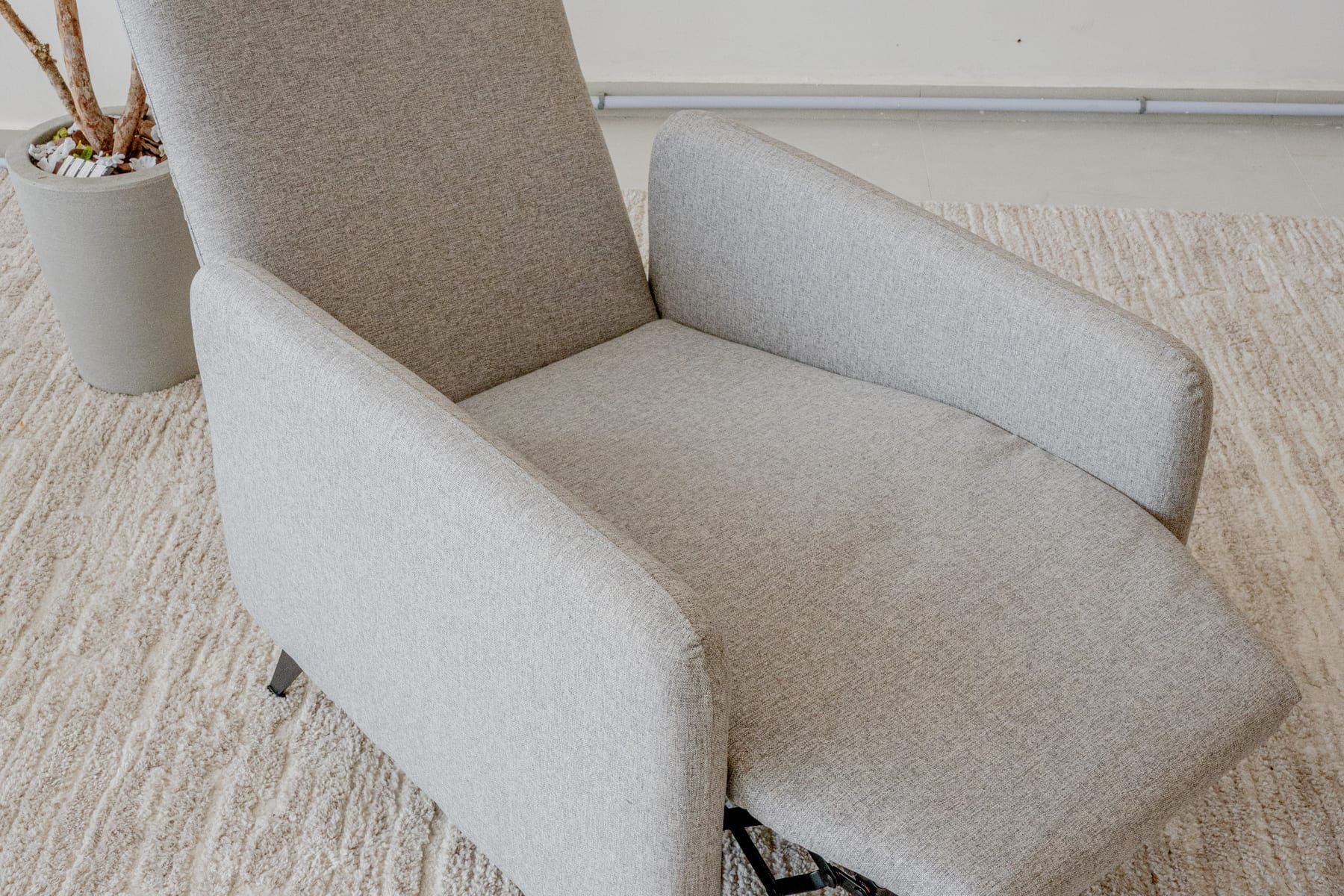
In a reading armchair, look at five things: a seat at the height where the entire sole of your foot rests on the floor, a depth that does not touch the back of your knee, a backrest that supports your lower back, arms that hold your forearms with your shoulders relaxed, and a light that gets close to the page. A reading armchair is the most personal piece in the living room: the sofa belongs to everyone, the armchair is yours. That is why I say you choose it sitting down, with a book in your hand.
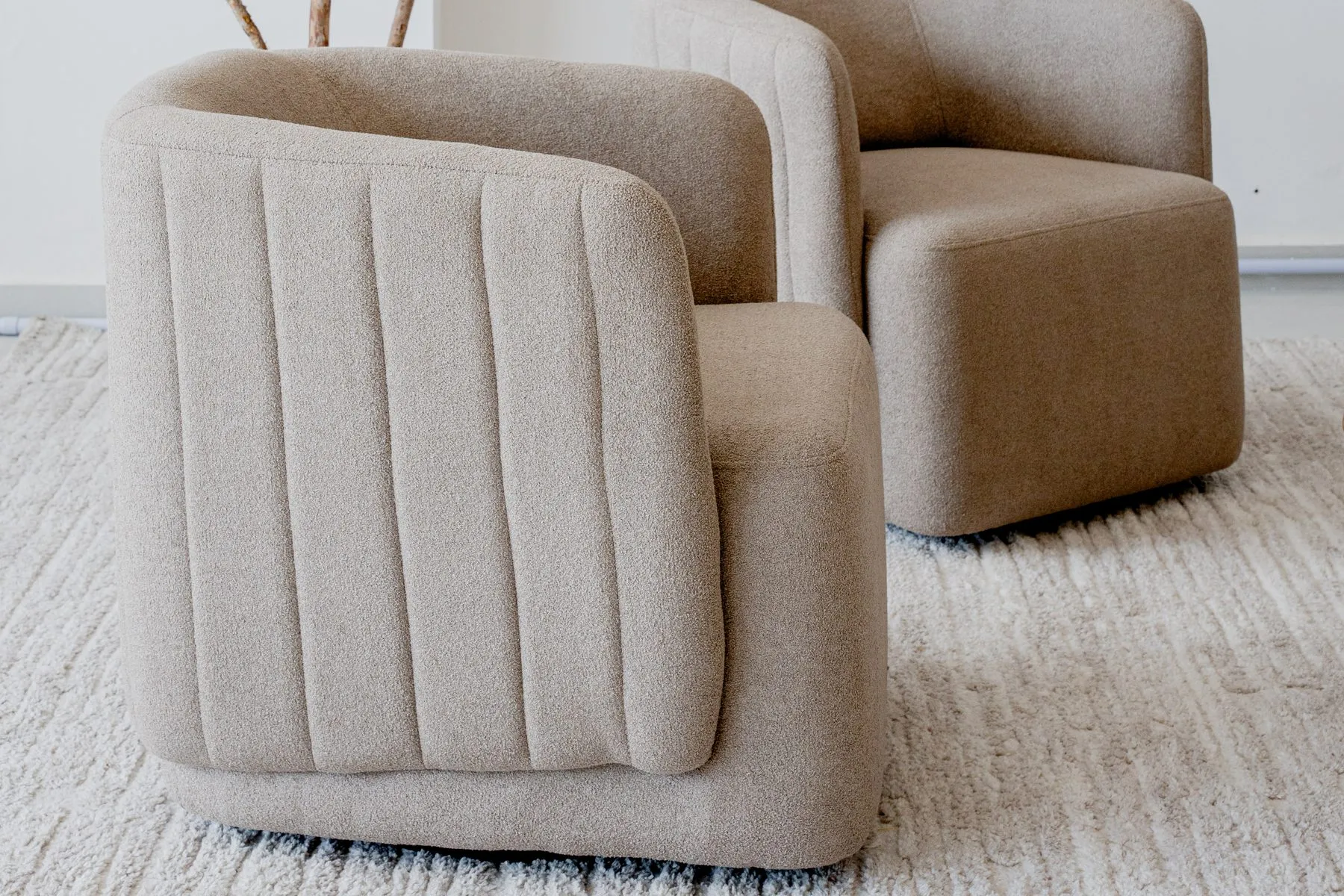
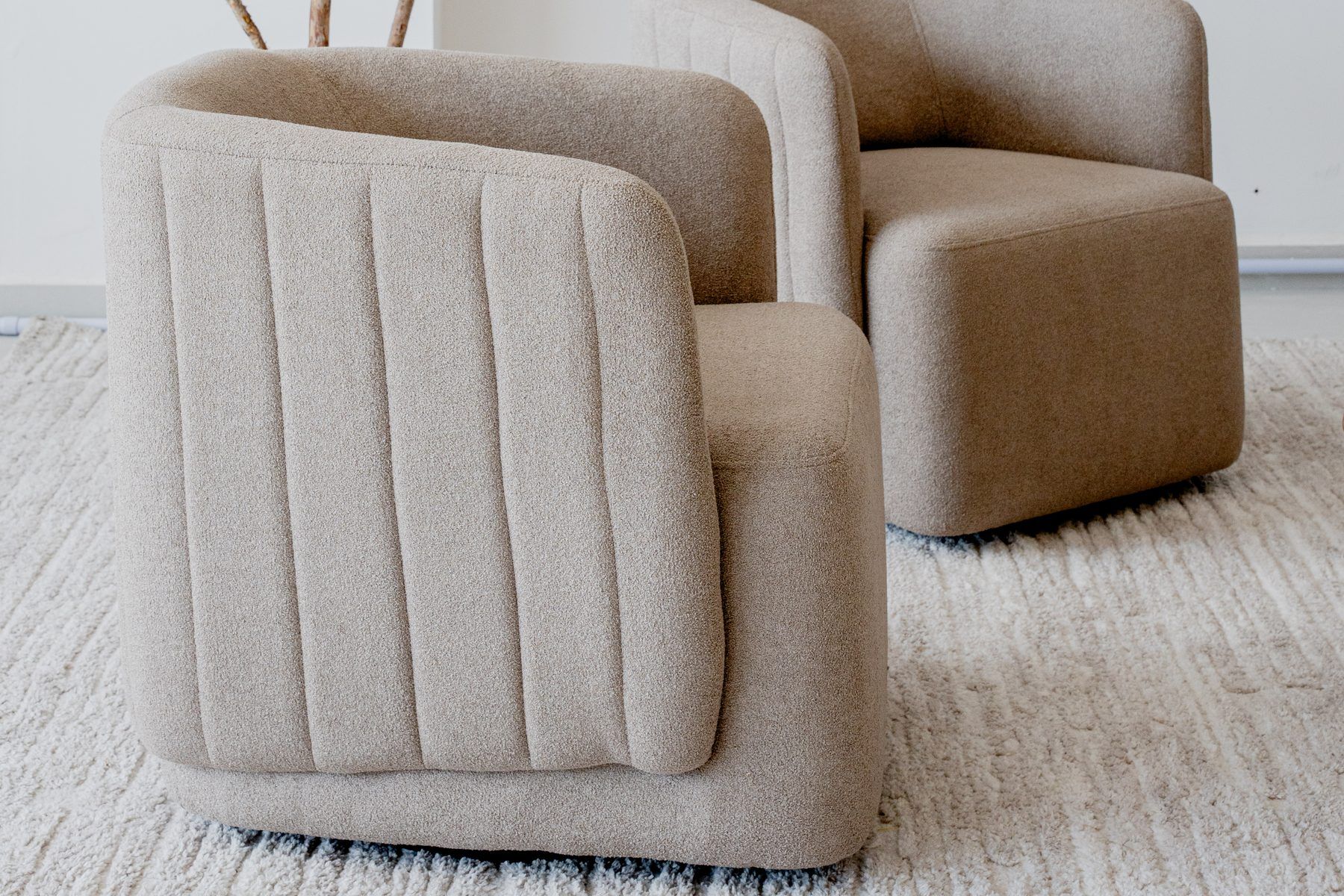
Armchairs in the Lucy Home showroom: the pieces on display change, so it is worth checking on WhatsApp what is set up.
What should I look for in a reading armchair?
I did not find a technical reference written for reading armchairs. What does exist, and helps, are the seating principles that OSHA, the US workplace safety agency, describes for office chairs. I use them as a test script:
| What to look at | How to test it sitting down | What the source says |
|---|---|---|
| Seat height | Do your feet rest flat on the floor? | The height is right when the entire sole of the foot can rest on the floor |
| Seat depth | Is there space behind your knee? | The seat supports you without its front edge touching the back of the knee |
| Backrest | Does it meet your lower back or leave a gap? | The backrest follows the natural curve of the spine and gives lumbar support |
| Arms | Do your shoulders stay loose with a book in your hand? | High enough to support the lower arms, low enough for the shoulders to relax |
| Footrest | With a pouf, do your legs rest? | It may raise the knee slightly and relieve pressure on the back of the leg |
What seat height and depth do I need?
The right ones are the ones that fit your body. Sit all the way back: if your feet dangle, the seat is high for you, and a pouf fixes it. If the edge of the seat presses behind your knee, it is too deep for reading upright, and a cushion behind your back shortens the distance. A deep seat is lovely for curling up with your legs tucked in; it just has to be a choice, not a surprise.
What should the backrest be like?
OSHA calls for a backrest that follows the natural curve of the spine and supports the lower back. In an armchair, feel whether your whole back rests against it or whether there is a gap at the bottom. For long reading sessions I like a high back that supports my head, but that is my own preference, not a rule. The guide on your sofa and your back goes through the same principles in more detail.
High arms, low arms or no arms?
When you read, the arms do real work: they carry the weight of the book or the tablet. According to OSHA, an armrest should be high enough to support your lower arms when they hang comfortably at your sides, low enough for your shoulders to stay relaxed, and soft, with your elbows close to your body. Test it with a real book: if your shoulders rise, the arm is too high; if you lean over to reach it, it is too low.
An armless chair looks lighter and is good for conversation. For long reading sessions, I miss the support.
Where should the light go?
Close to the page. An article from Optometry Australia, the association of Australian optometrists, written for professionals who see people with low vision, makes three points that apply to any reading corner:
- Distance rules. Illumination follows an inverse-square rule: doubling the distance between the bulb and the page leaves a quarter of the light; tripling it leaves a ninth.
- A lamp behind the shoulder is usually too far away. The article notes that even people with a proper reading lamp tend to place it behind their shoulder, and that the bulb needs to be close to the page to concentrate the light where it is needed.
- A flexible arm. A flexible-arm lamp is usually the most suitable, and the general rule is as much light as the person can manage without glare.
In practice: a floor or table lamp with an adjustable arm, beside the armchair, that you pull in close to the book. If you have trouble seeing, the answer is an eye doctor, not decorating.
What else does a reading corner need?
- A side table within reach, for your cup, your glasses and the book of the moment.
- A pouf, which works as a footrest and as an extra seat.
- A rug, which defines the corner and makes it feel like a place of its own.
- A window nearby, for reading in daylight.
On color: an armchair is the touch of personality in a living room. The guide on armchairs for the living room shows how to match one with the sofa, and the guide on color combinations in the living room helps you tie in the rug and the cushions.
How do I test an armchair in the showroom?
- Bring a book or open a long text on your phone.
- Sit all the way back and check your feet and your knees.
- Rest your forearms and see whether your shoulders relax.
- Spend ten minutes actually reading.
- Stand up and sit down again: was it easy to get out?
- Ask for a pouf and test it with your feet up.
Come and read a chapter here
Lucy Home has armchairs on display in the showroom, at Av. Presidente Kennedy, 3870, Aviação, Praia Grande, and the pieces change: message us on WhatsApp to find out what is set up and ask for the measurements. On made-to-order pieces, the store lets you customize color and fabric. Bring your book and take your time. You can also browse the armchair category.
Frequently asked questions
What should I look for in a reading armchair?
Five things: a seat where the entire sole of your foot rests on the floor, a depth that does not touch the back of your knee, a backrest that supports your lower back, arms that hold your forearms with your shoulders relaxed, and a light that gets close to the page. The first four are principles OSHA describes for office chairs; I use them as a test script.
Where should the lamp go next to a reading armchair?
Close to the page. An article from Optometry Australia, the association of Australian optometrists, explains that illumination falls with the square of the distance: doubling the distance between the bulb and the page leaves a quarter of the light. The same article says a flexible-arm lamp is usually the most suitable.
Does a reading armchair need a footrest?
It helps when the seat is high for you. OSHA recommends a footrest when your feet do not reach the floor and says it may raise the knee slightly and relieve pressure on the back of the leg. A pouf in front of the armchair does that job.
Should a reading armchair have arms?
For reading, I prefer arms, because they carry the weight of the book. According to OSHA, an armrest should be high enough to support your lower arm and low enough for your shoulders to stay relaxed, with your elbows close to your body.