Home / Articles / Beach homes
Salt air and furniture: what it does to metal, wood and upholstery, and how to choose pieces that hold up
By Lucy Home. Published 14/11/2026, updated 14/11/2026.
Salt air ruins metal first, then unfinished wood, and upholstery last, and in each case the reason is different: for metal it is the salt, for wood it is humidity, for upholstery it is still, humid air. Knowing that changes the question you ask in the store. Instead of “will this sofa survive the beach?”, the question becomes “what is the frame made of, what hardware does it use, what is the foam density and how do I care for the fabric”. I wrote this guide for anyone furnishing a house or apartment on the coast who has already watched a good-looking piece rust, warp or mold in two seasons.
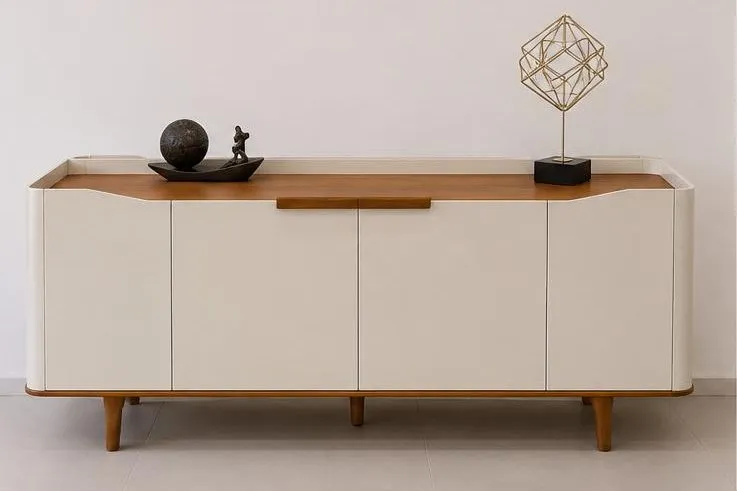
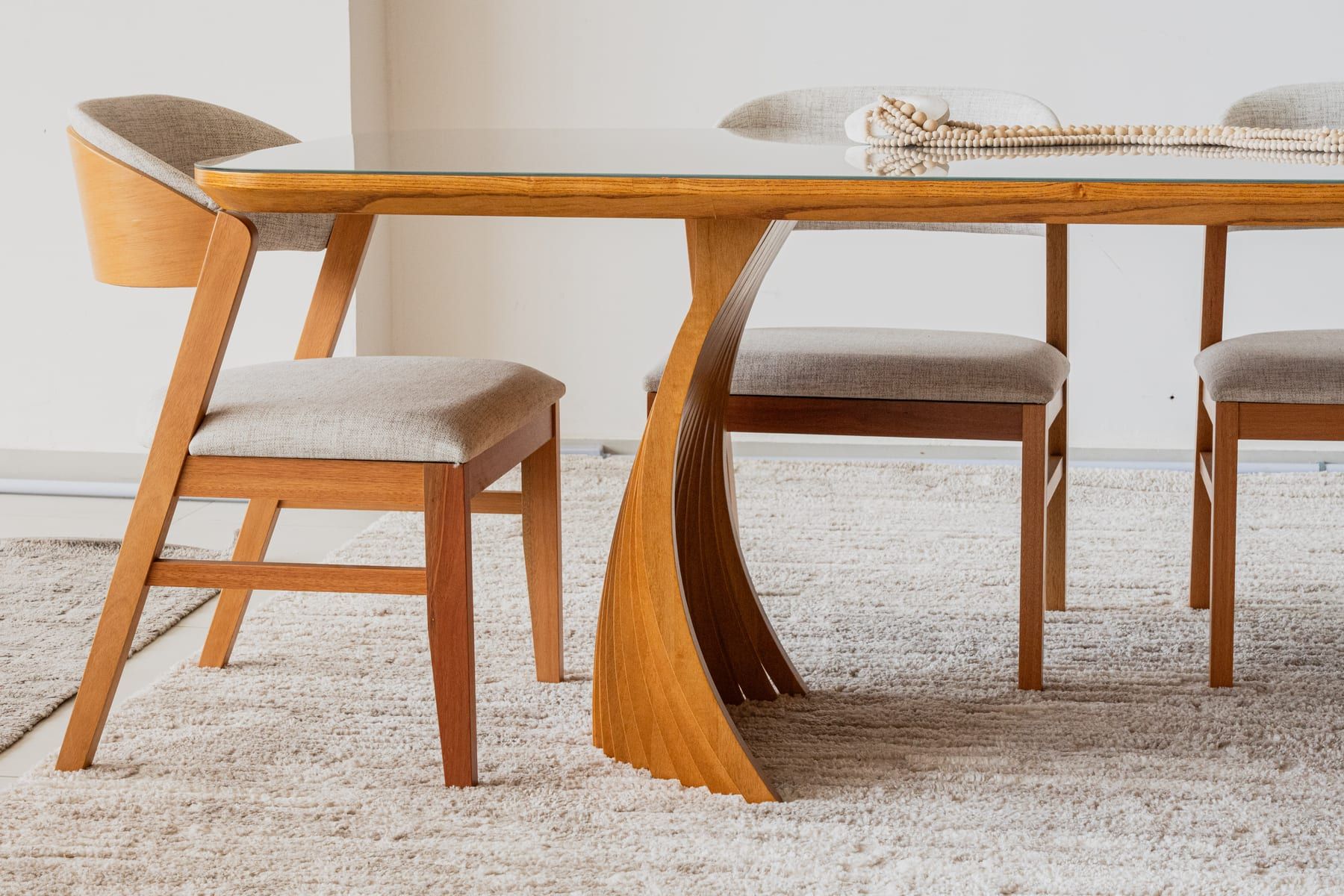
Buffet with a wood top and doors at the Lucy Home showroom: hinges and drawer slides are the hardware that suffers most near the sea.
What salt air is, and why metal goes first
Salt air is the salt-laden air the wind carries off the sea. The American Galvanizers Association (AGA), the US galvanizing industry association, explains that sea spray is among the factors that speed up corrosion and that chlorides, that is, salt, are the main determinants of corrosion in a seawater environment. On another page, the AGA describes the environment aggressiveness categories used by the international ISO standard: category C3 includes urban areas near the ocean and sheltered coastal locations with low chloride; C4, locations within about 1 km of the ocean; C5, locations within a few hundred meters of the ocean and exposed stretches of coastline; and CX, the splash zone. The zinc corrosion rate the AGA cites for C5 is up to ten times that of C3.
I do not assign a category to any Praia Grande neighborhood, because I have no source for that. What the classification teaches is the principle: the closer to the sand and the more the breeze comes through the window, the harsher the environment for any unprotected metal. An oceanfront apartment and one three blocks inland are not in the same environment.
Metal: hardware, frame and legs
In furniture, metal shows up in places you do not see: screws, hinges, drawer slides, the staples that fix the webbing to a sofa frame, the sliding-seat mechanism, the stem of a side table, a chair leg. That is where salt air starts, and that is where cheap furniture gives up: ordinary hardware rusts, the drawer jams, the hinge stains the door, the staple lets the webbing go and the seat sags.
What the Brazilian source shows: a study presented at the corrosion congress of ABRACO, with two years of exposure at stations on the Aracaju shoreline, compared painted carbon steel with galvanized and painted steel (a duplex system) and concluded that painted galvanized steel performed better. In store language: metal protected by galvanizing holds up at the beach far better than metal that is only painted.
What I ask on the spec sheet:
- Does the sofa frame use galvanized staples? The Diamond sofa spec sheet says it does.
- Are the sliding seats steel, and how are they protected? The Bali sliding-seat sofa spec sheet lists steel sliding seats; the surface protection we confirm with the manufacturer.
- Are the hinges, slides and screws of a buffet, TV unit or console galvanized or stainless?
- What finish do metal table and chair legs and bases have?
When the sheet does not say, the Lucy Home team asks the manufacturer before you commit. I found no open comparative source on aluminum and stainless steel to cite here, so I speak only of what the source shows, galvanized steel.
Wood: not the salt, the humidity
Wood does not rust, but it suffers from coastal air by another route. Purdue University, in a text about furniture (FNR-163), explains that wood adsorbs moisture and swells when the air is humid, and loses moisture and shrinks when the air is dry; a finish slows this down but does not stop it. The source gives the scale: at 30 percent relative humidity wood settles at about 6 percent internal moisture, at 75 percent at about 14 percent. And it lists the damage of that back and forth: joints that open, tops that crack, finish that crazes along the glue line, drawers and doors that stick.
On the Sao Paulo coast, where average air humidity is above 80 percent, that means two things when you choose:
- A complete finish, including the underside of the top and the back of the piece. The unvarnished part breathes most, and that is where a top warps.
- Treated wood in the upholstered frame. The Bali spec sheet lists a frame in treated plantation eucalyptus; the Diamond’s, eucalyptus and MDF. Always ask.
The guide solid wood or MDF table compares the two materials, and the one on furniture for a beach apartment looks at every material in the home.
Upholstery: still humidity, not salt
On the effect of salt on fabric, leather and foam I found no open technical source, so I make no claim. What the sources show is the effect of humidity: the EPA recommends indoor humidity below 60 percent, ideally between 30 and 50 percent, and explains that mold forms where air does not circulate, including behind furniture against the wall. Foam and fabric hold moisture and, in a home closed for weeks, become the perfect place for it.
What I look at in upholstery for the coast:
- Foam with a declared density. The Polyurethane Foam Association (PFA) explains that density affects durability and support and that, typically, the higher the density, the better the foam retains its original properties. The Diamond’s sheet lists D28 and D29 in the seat.
- Fabric with a cleaning code on the tag, so you know whether it takes water when you remove sunscreen and sand. The guide to caring for leather and fabric sofas explains the codes.
- Independent modules, so you replace one if it molds, instead of the whole sofa.
- A routine, which is in the guide beach house: what to do when you arrive and when you leave.
Why cheap furniture gets expensive near the sea
Put the three sources together and the conclusion appears on its own: the piece that saves on hardware rusts, the one that saves on finish warps, the one that saves on foam sags, and on the coast all of it happens faster. It is not about brand or the price on the tag, it is about the spec sheet. That is why, at Lucy Home, the conversation starts with the sheet: what is inside, which wood, which staple, which foam, which fabric. People who know the pieces answer, and what the sheet does not say we ask the manufacturer. The article furniture that lasts on the coast has the full list of questions.
Come and see the spec sheet and sit on the sofa
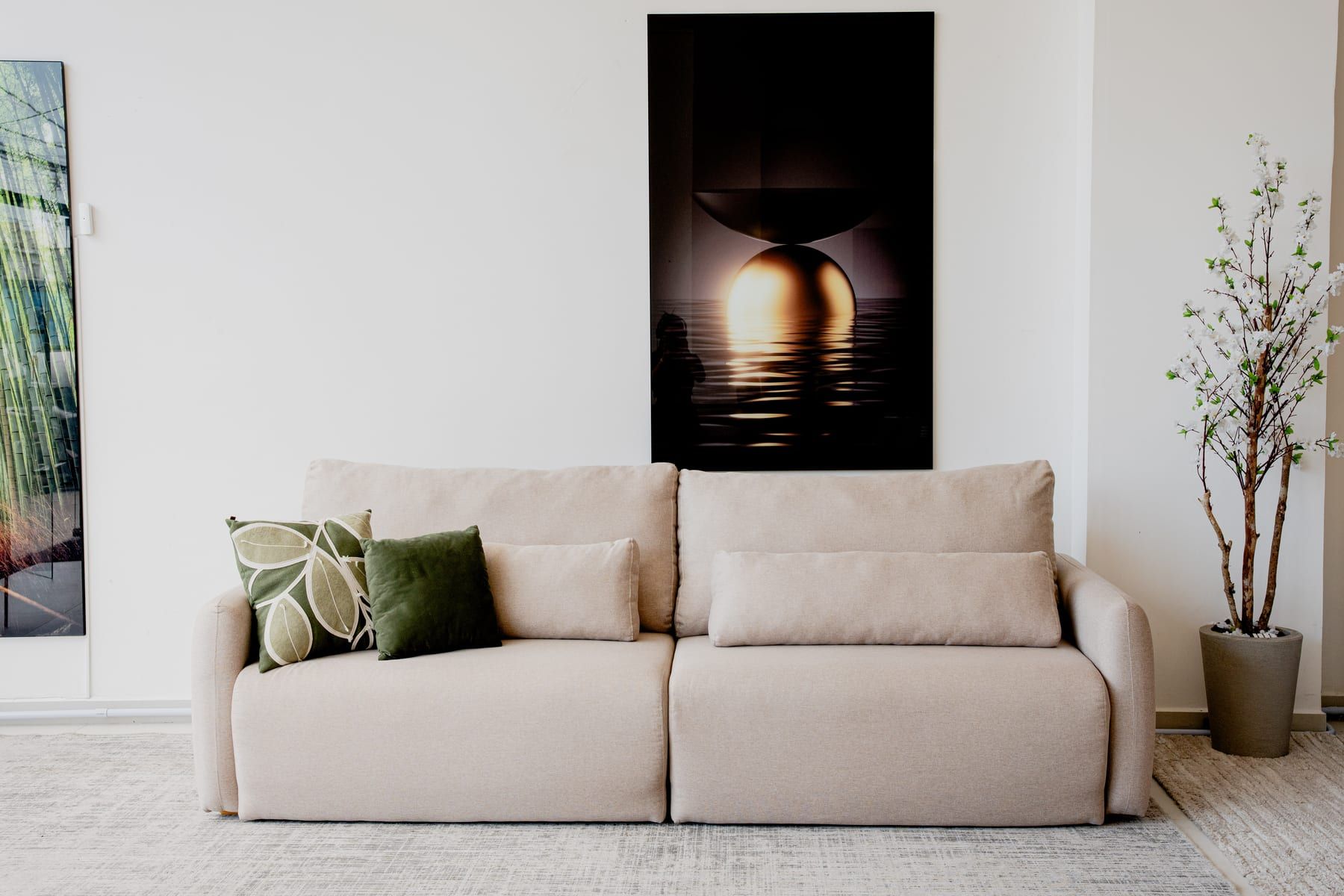
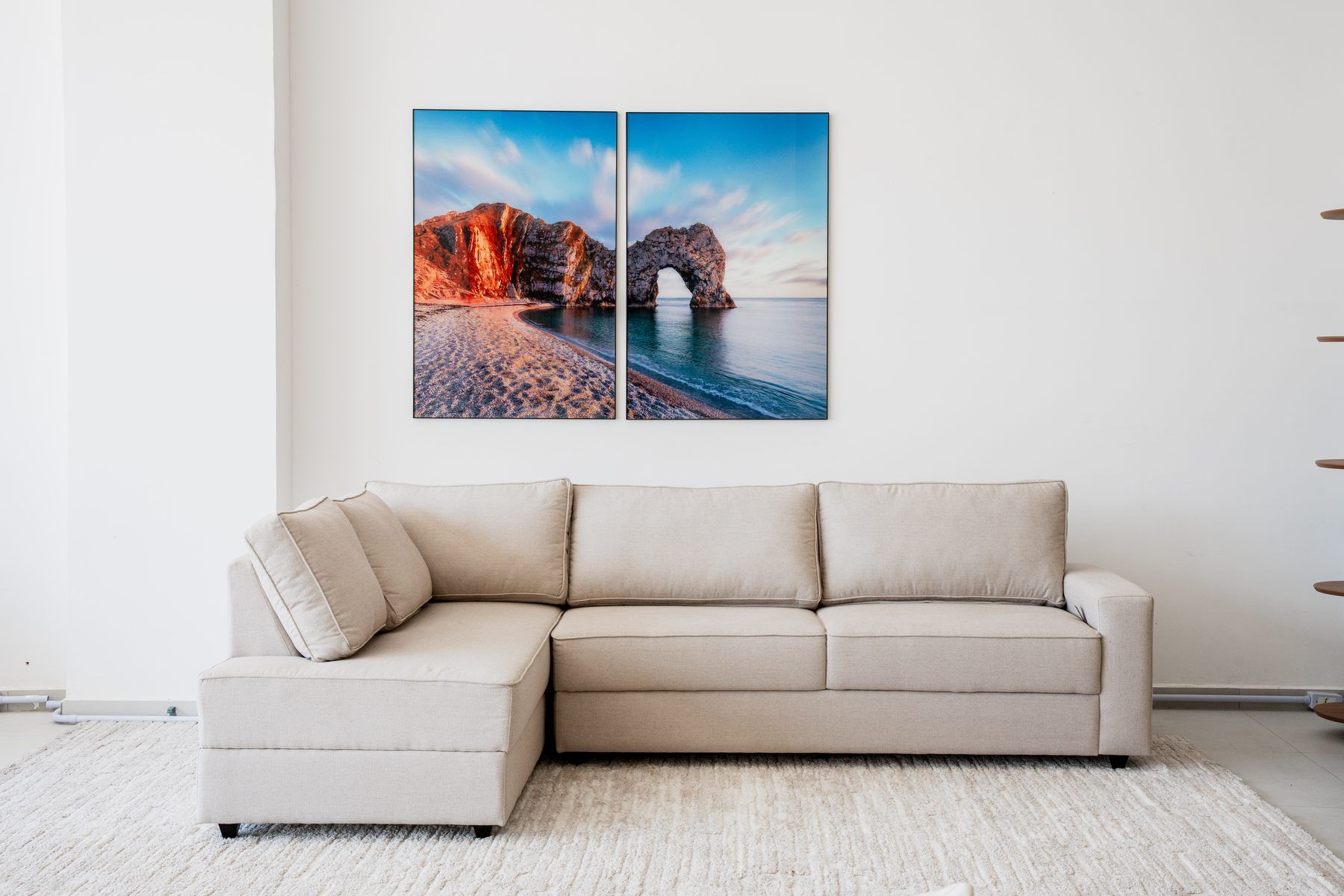
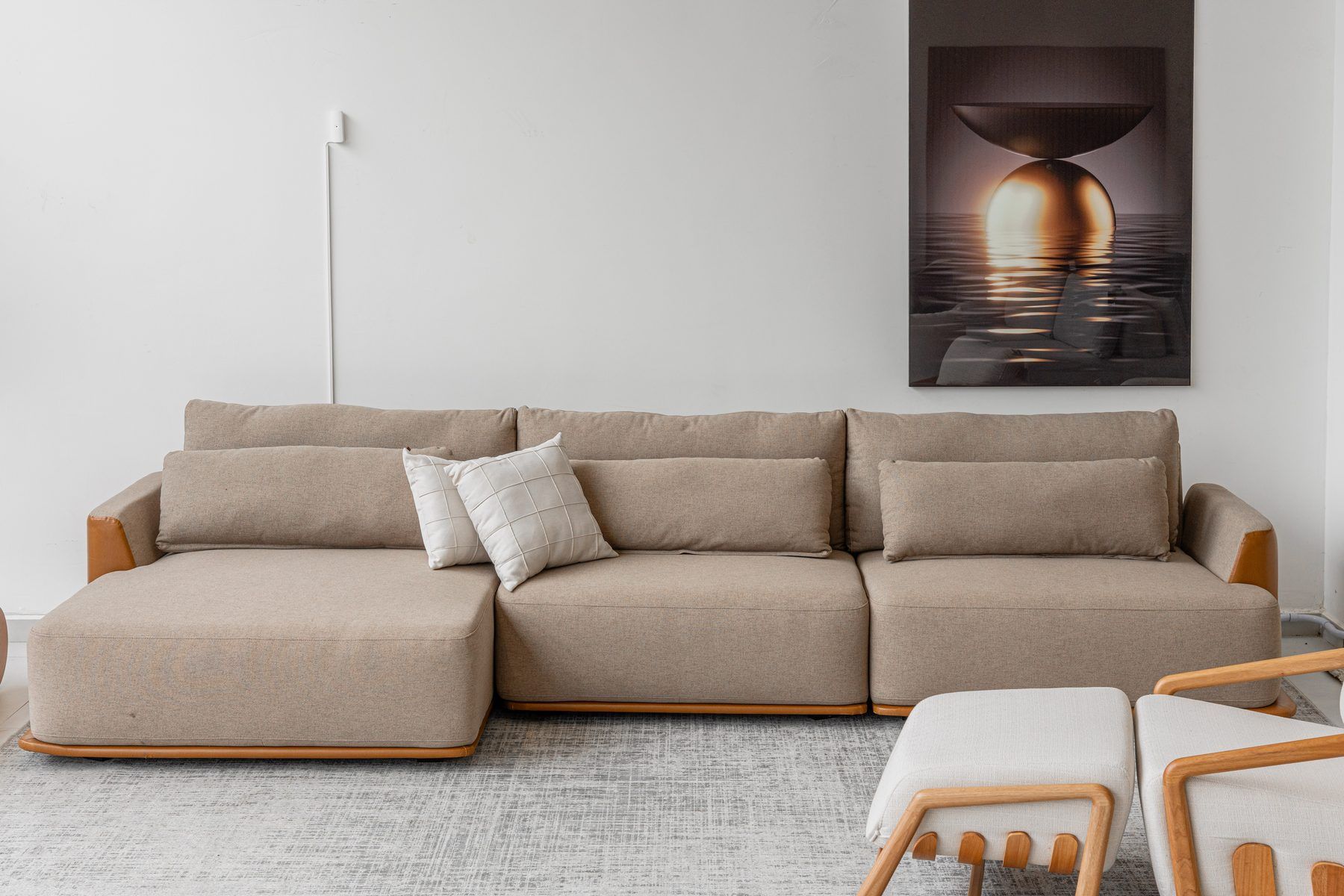
Lucy Home is at Av. Presidente Kennedy, 3870, Aviação, Praia Grande, and has sold furniture for the coast long enough to know what comes back with problems and what does not. Come see the sofas and tables set up, ask for each one’s sheet and sit down. If you prefer, message us on WhatsApp with a photo of your living room; room planning is at no cost. See also the sofas page and the tables page.
Frequently asked questions
What is salt air and why does it damage furniture?
Salt air is the salt-laden air that comes off the sea. The American Galvanizers Association (AGA) explains that chlorides from sea spray are among the main factors that speed up metal corrosion, and that environments are classified in categories by distance from the sea. On a piece of furniture, salt attacks the hardware first: screws, hinges, drawer slides, metal legs and the staples in the frame.
How far from the sea does salt air affect furniture?
Based on the ISO categories, the AGA describes urban areas near the ocean as category C3, locations within about 1 km of the ocean as C4, and locations within a few hundred meters of the ocean or on exposed stretches of coastline as C5, the harshest outside the splash zone. The closer and the more exposed to the breeze, the faster ordinary metal corrodes.
Can furniture with iron parts go in a beach house?
Yes, if the steel is protected. A study presented at ABRACO's corrosion congress, with two years of exposure on the Aracaju shoreline, showed that galvanized and painted steel (a duplex system) outperformed carbon steel that was only painted. Ask whether the hardware and frame are galvanized or stainless. The Diamond sofa's spec sheet, for example, lists galvanized staples.
Does salt air ruin fabric or leather sofas?
I found no open technical source on the effect of salt on upholstery fabric and leather, so I make no claim about it. What the sources show is the effect of air humidity, which on the coast is above 80 percent: foam and fabric hold moisture and mold settles where air does not circulate, according to the EPA. The hardware and the frame staples, those do suffer from salt.
Sources
- American Galvanizers Association (AGA), HDG Corrosion Rates for ISO Categories C1-C5/X (environment categories by distance from the sea)
- American Galvanizers Association (AGA), Performance of Galvanized Steel in Different Environments (sea spray and chlorides)
- ABRACO (Brazilian Corrosion Association), INTERCORR 2018, two-year atmospheric exposure of painted carbon steel and painted galvanized steel (duplex system) at two Petrobras stations (Aracaju shoreline)
- Purdue University, Carl A. Eckelman, The Shrinking and Swelling of Wood and Its Effect on Furniture (FNR-163)
- EPA (US Environmental Protection Agency), A Brief Guide to Mold, Moisture and Your Home
- Polyurethane Foam Association (PFA), Foam Performance: density, durability and firmness of flexible foam