Plants toxic to dogs, cats and children: which to avoid and which are safe
By Lucy Home. Published 15/11/2026, updated 15/11/2026.

Several of the most common living room plants are toxic to dogs and cats if chewed: golden pothos, snake plant, peace lily, dumb cane and monstera are on the list. In a home with an animal or a small child, the simplest choice is to start from the non-toxic ones, such as the Boston fern, areca palm, spider plant, lady palm and orchid. The lists below come from the ASPCA, the American animal welfare organization, and from Fiocruz, the Brazilian public health foundation.
Lucy Home does not sell plants. This guide exists because the question comes up along with the one about the sofa: people with pets want to know what can stay beside it. I am not a veterinarian or a doctor: if something is eaten, seek care.
Which houseplants are toxic to dogs and cats?
| Plant | What the ASPCA records |
|---|---|
| Golden pothos (Epipremnum aureum) | Toxic to dogs and cats; insoluble calcium oxalates; oral irritation, drooling, vomiting, difficulty swallowing |
| Snake plant (Dracaena trifasciata) | Toxic to dogs and cats; saponins; nausea, vomiting, diarrhea |
| Peace lily (Spathiphyllum) | Toxic to dogs and cats; calcium oxalates |
| Dumb cane (Dieffenbachia) | Toxic to dogs and cats; insoluble calcium oxalates and a proteolytic enzyme |
| Monstera (Monstera deliciosa) | Toxic to dogs and cats |
| Weeping fig (Ficus benjamina) | Toxic to dogs, cats and horses |
| Aloe vera (Aloe vera) | Toxic to dogs and cats; saponins and anthraquinones |
| Flamingo flower (Anthurium scherzeranum) | Toxic to dogs and cats |
| Lilies (Lilium) | Toxic to cats; kidney failure |
| Sago palm (Cycas revoluta) | Toxic to dogs, cats and horses; cycasin; liver failure and death |
The entries come from the ASPCA list of toxic and non-toxic plants. Three notes:
- ZZ plant (Zamioculcas zamiifolia). The fact sheet from NC State, North Carolina State University Extension, records medium-severity toxicity for dogs and cats, from calcium oxalate.
- Lily and peace lily are different plants. The danger of kidney failure in cats belongs to lilies of the genus Lilium, common in bouquets.
- The sago palm is the most serious on the list. The ASPCA entry mentions liver failure and death. In a home with pets, I do not use it.
Which ones are safe?
| Plant | ASPCA record |
|---|---|
| Boston fern (Nephrolepis exaltata) | Non-toxic to dogs and cats |
| Areca palm (Dypsis lutescens) | Non-toxic to dogs, cats and horses |
| Spider plant (Chlorophytum comosum) | Non-toxic to dogs and cats |
| Prayer plant | Non-toxic to dogs, cats and horses |
| Moth orchid (Phalaenopsis) | Non-toxic to dogs, cats and horses |
| Lady palm (Rhapis excelsa) | Non-toxic to dogs and cats |
| Parlor palm (Chamaedorea elegans) | Non-toxic to dogs and cats |
Non-toxic does not mean edible. The ASPCA itself warns that eating any plant material may cause vomiting and gastrointestinal upset in dogs and cats.
You can set up the whole living room from this list alone: a lady palm or an areca palm on the floor, an orchid on the sideboard and a fern on a stand. The care for each one is in the guides to large plants for the living room and to plants that ask for extra care.
And children?
Fiocruz recorded, in 2007, that six in every ten plant poisoning cases in Brazil involved children under 9. Among the plants most often involved, the article names dumb cane, poinsettia and crown of thorns. The illustrated list from Sinitox, the toxicology information system at Fiocruz, also includes caladium, monstera, anthurium and oleander.
The guidance from Fiocruz:
- Teach children not to play with plants or put them in their mouths.
- In case of poisoning, go to a medical service and take the plant along for identification.
The coordinator interviewed by Fiocruz does not argue for removing plants from the home. I add my own advice as a decorator: know the name of every plant you have and where it is.
Where should the pot go in a home with pets and children?
The species comes first. Then the place:
- A toxic plant does not stay on the floor or on a low table. The coffee table and the side table are at the height of a crawling child and of a dog’s nose.
- Sideboard, buffet and a high shelf work with dogs and small children. With cats, they do not: cats climb. If there is a cat, stay with the non-toxic ones.
- A trailing plant should not have stems hanging within reach.
- A heavy, stable floor pot that will not tip over with a wag of the dog’s tail. Soil on the rug and the upholstery is a chore.
- A fallen leaf gets picked up the same day.
The right sofa material for a home with animals is in the guide to the sofa for homes with dogs and cats, and the composition of the room is in plants in the living room.
What should I do if someone eats the plant?
- Dog or cat: go to the veterinarian. The ASPCA advises contacting your local veterinarian as soon as you suspect something was eaten.
- Child: go to a medical service and take the plant along for identification.
Plan the living room for the whole family
At Lucy Home, at Avenida Presidente Kennedy, 3870, Aviação, Praia Grande, the team helps you plan the room at no cost. Message us on WhatsApp, tell us who lives in the home, animals included, and send the living room measurements: we suggest the right sofa, armchair and sideboard for your routine, with the place for the plants thought through. You can also browse the sofas and the buffets and sideboards.
Pieces mentioned in this article
- Ask about this model

Fixed leather sofa
Presentation image of the model.
- Ask about this model

Diamond sofa
- Ask about this model

Leather armchair
Presentation image of the model.
- Ask about this model

Linea console table
Presentation image of the model.
Plants mentioned in this article
-
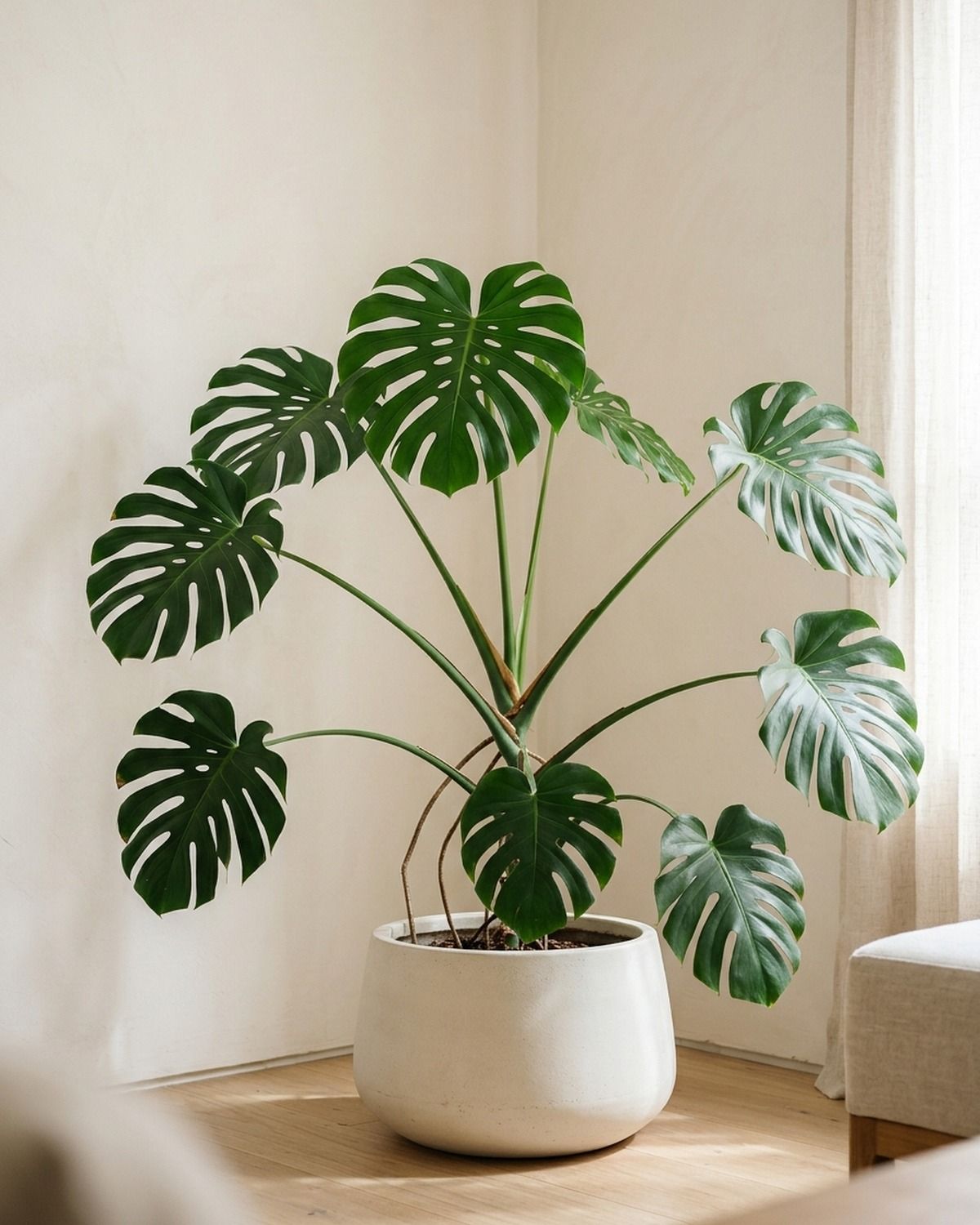
Monstera
Indoor plant to bring life to the room.
Frequently asked questions
Which plants are toxic to cats and dogs?
The ASPCA lists as toxic to dogs and cats, among others, golden pothos, snake plant, peace lily, dumb cane, monstera, weeping fig, aloe vera and sago palm. The sago palm is the most serious: it can cause liver failure and death.
Which plants are safe for cats and dogs?
The ASPCA lists as non-toxic to dogs and cats the Boston fern, areca palm, spider plant, prayer plant, moth orchid, lady palm and parlor palm. Even so, eating any plant can cause vomiting.
Are lilies dangerous for cats?
Yes. The ASPCA records lilies of the genus Lilium as toxic to cats, with a risk of kidney failure. The peace lily is a different plant, of the genus Spathiphyllum: it is also toxic, but because of calcium oxalate crystals that irritate the mouth.
Is dumb cane dangerous for children?
It is one of the plants Fiocruz, the Brazilian public health foundation, names among those that most often cause poisoning in Brazil. According to Fiocruz, six in every ten plant poisoning cases in the country involve children under 9.
What should I do if a pet or a child eats a plant?
With an animal, go to the veterinarian. With a child, the guidance from Fiocruz is to go to a medical service and take the plant along for identification.
Sources
- ASPCA Animal Poison Control, Toxic and Non-Toxic Plants List
- ASPCA, Golden Pothos
- ASPCA, Snake Plant
- ASPCA, Peace Lily
- ASPCA, Dieffenbachia
- ASPCA, Cutleaf Philodendron
- ASPCA, Lily
- ASPCA, Sago Palm
- ASPCA, Boston Fern
- ASPCA, Areca Palm
- ASPCA, Spider Plant
- NC State Extension Plant Toolbox, Zamioculcas zamiifolia
- Fiocruz news agency (Brazil), article on spring raising the risk of poisoning by toxic plants (in Portuguese, October 2, 2007)
- Sinitox (Icict/Fiocruz, Brazil), photo list of toxic plants (in Portuguese)