Large plants for the living room: fiddle-leaf fig, monstera and palms as a decor piece
By Lucy Home. Published 15/11/2026, updated 15/11/2026.
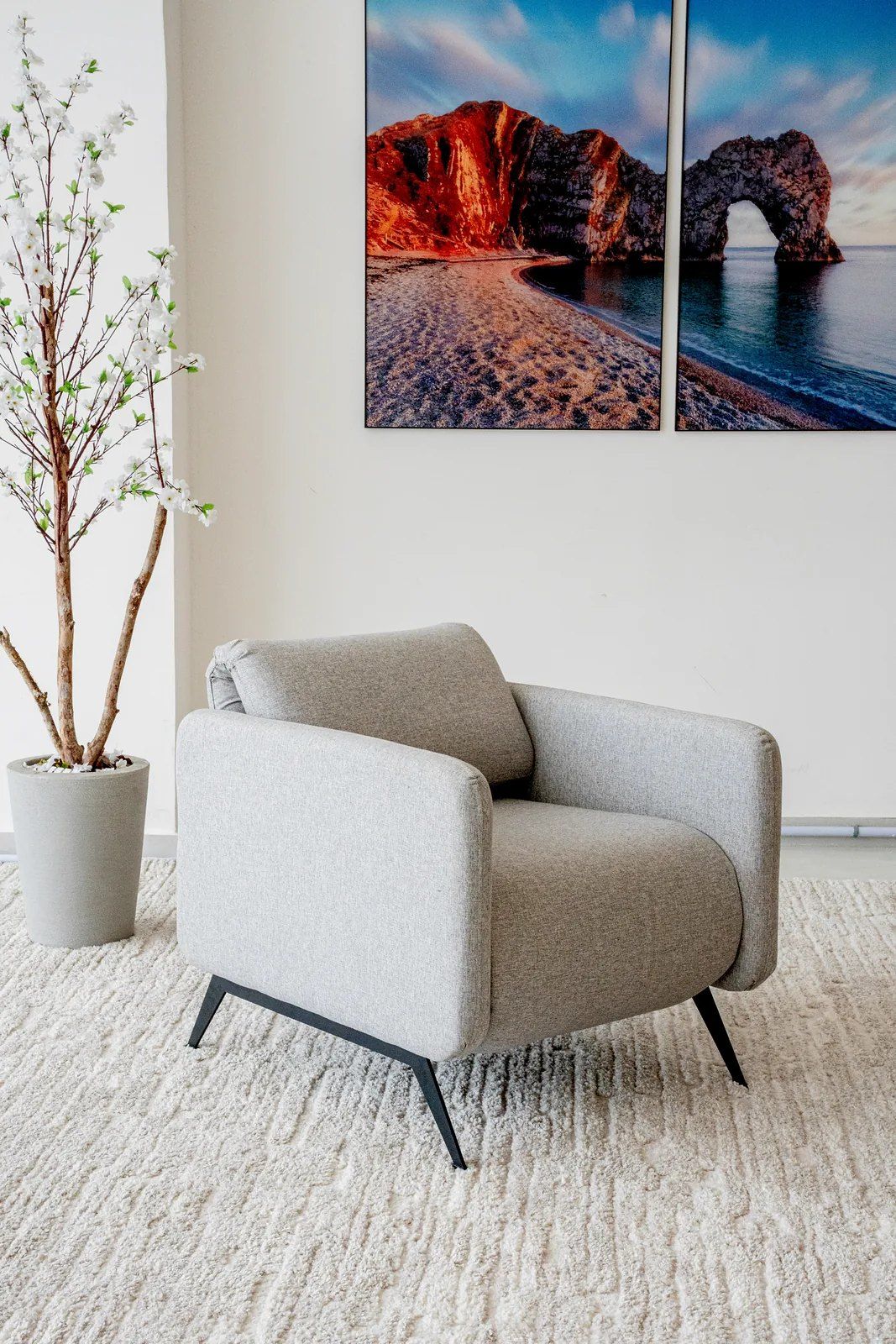
A large floor plant plays the part of a decor piece: it fills the height no furniture fills and brings life to the empty corner beside the sofa or the armchair. The most used are the fiddle-leaf fig, monstera, lady palm, areca palm and corn plant. The choice starts with the light in the corner and the ceiling height, and only then with taste. A single one, well placed, is enough for the room.
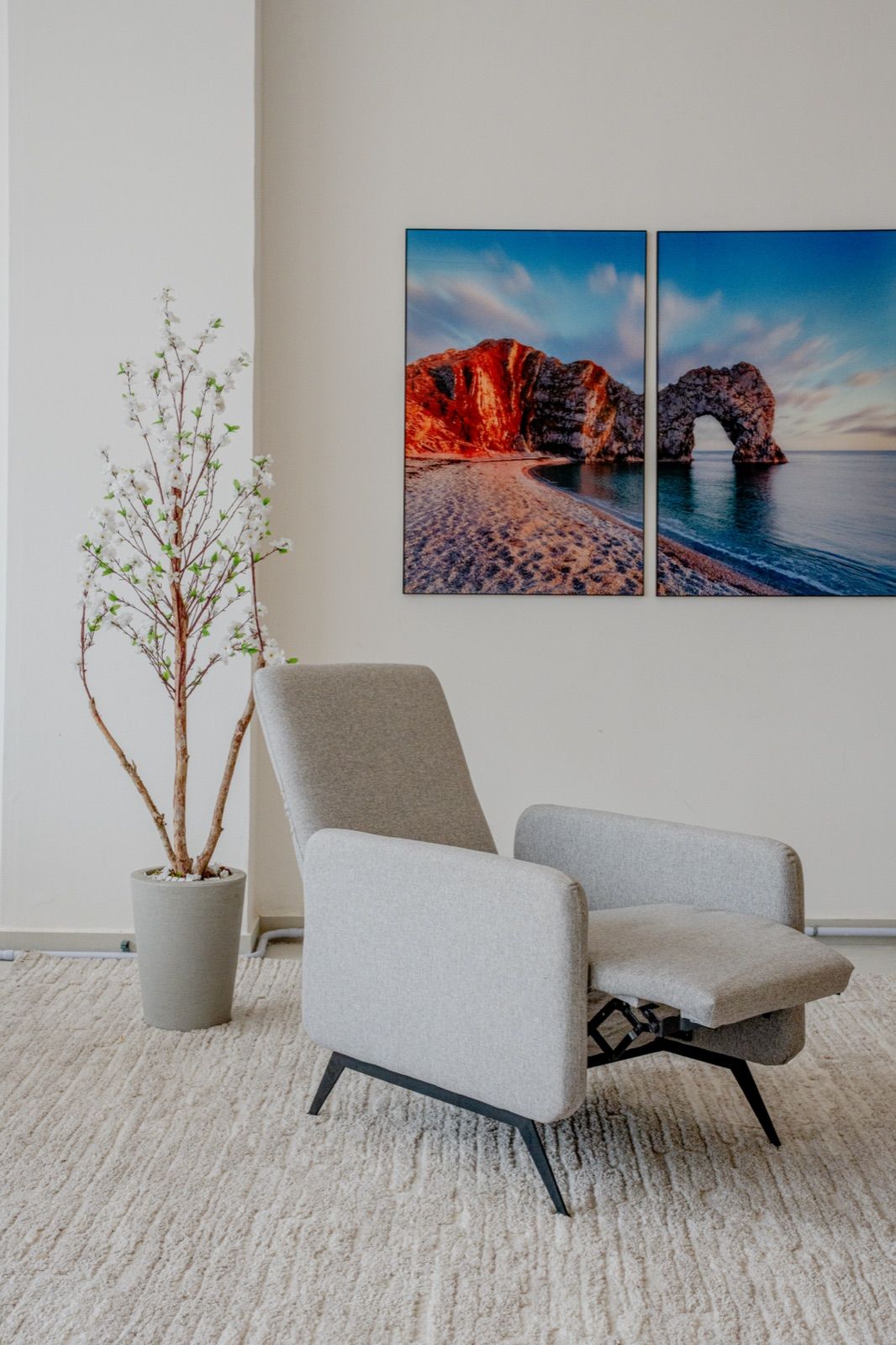
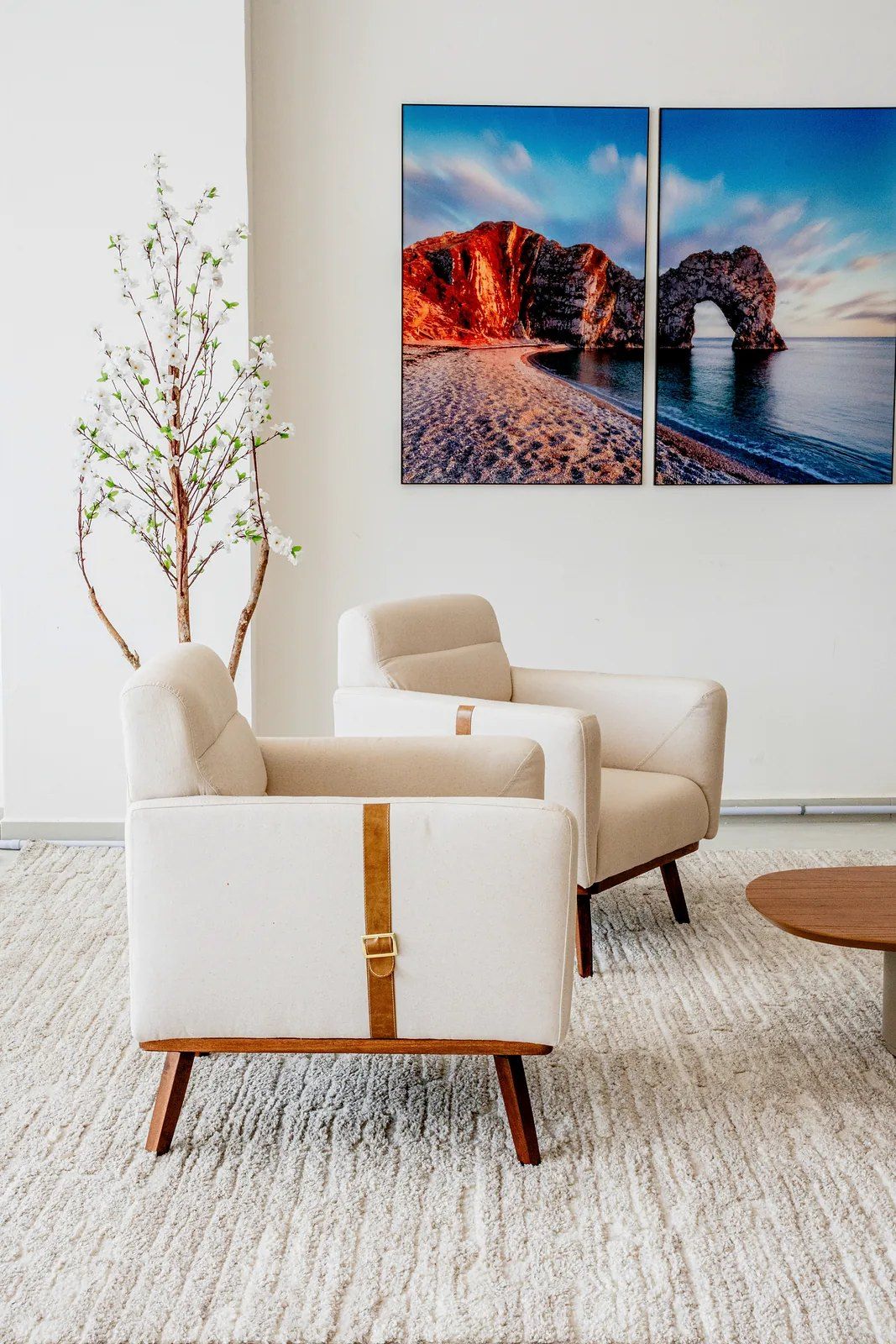
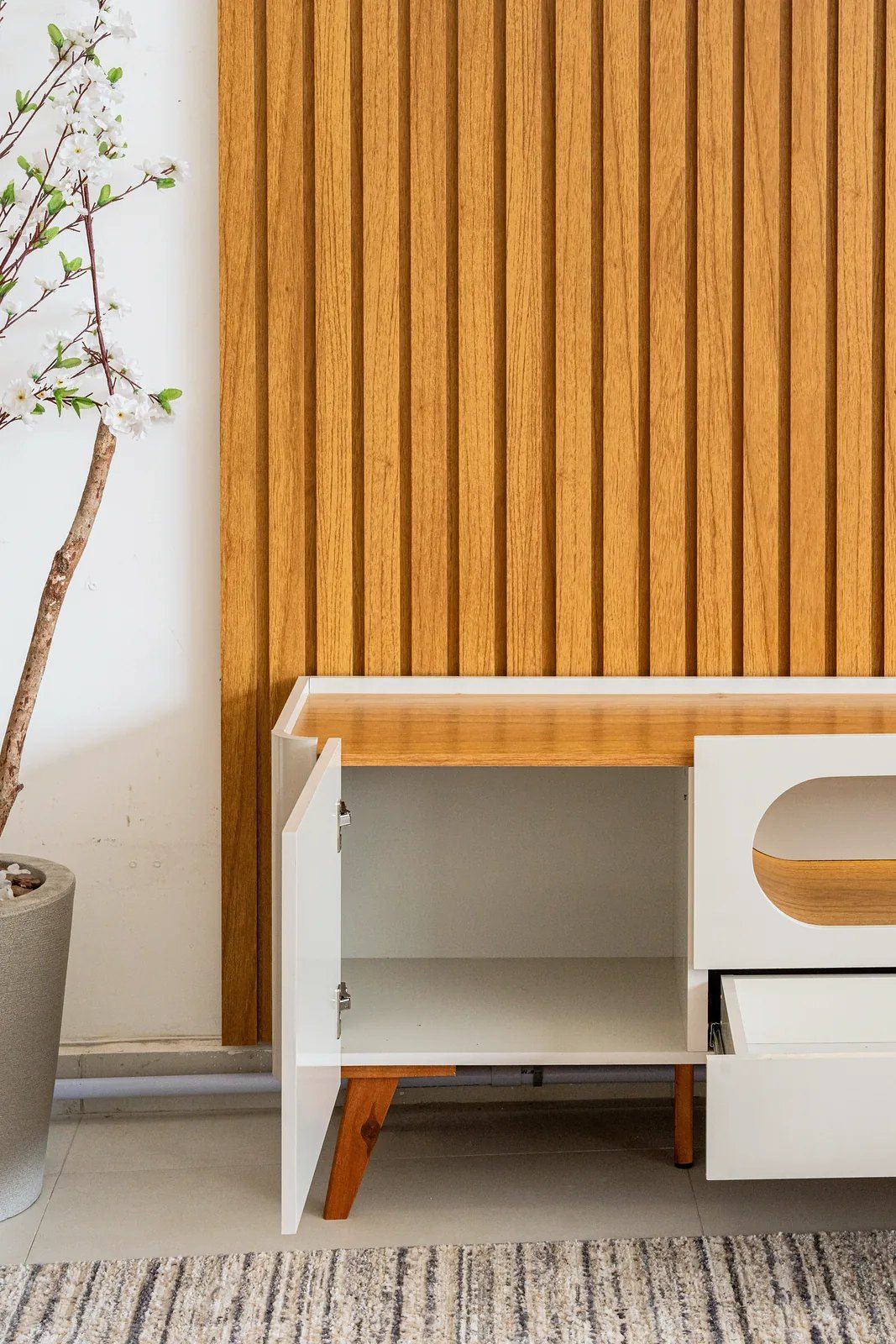
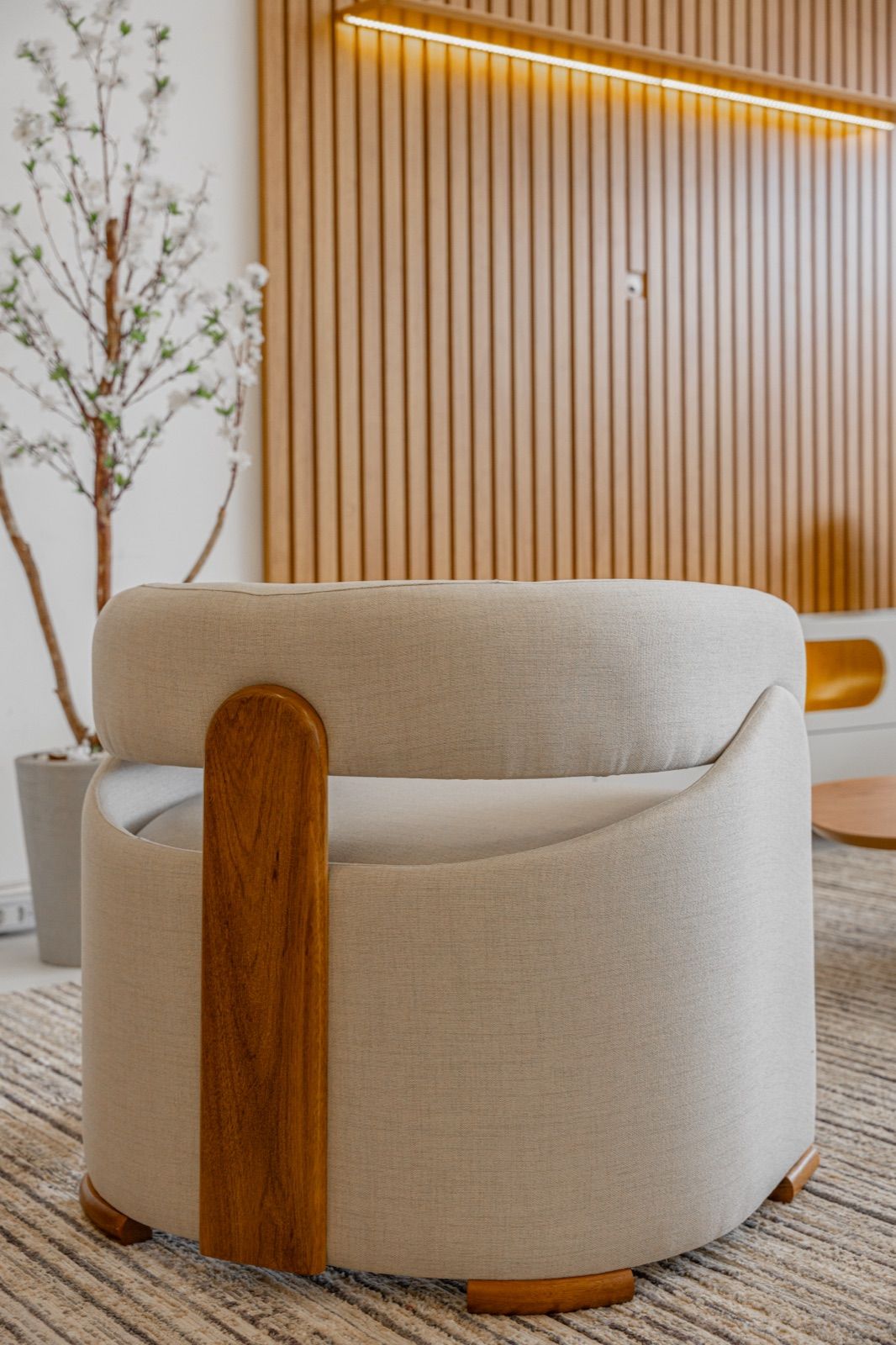
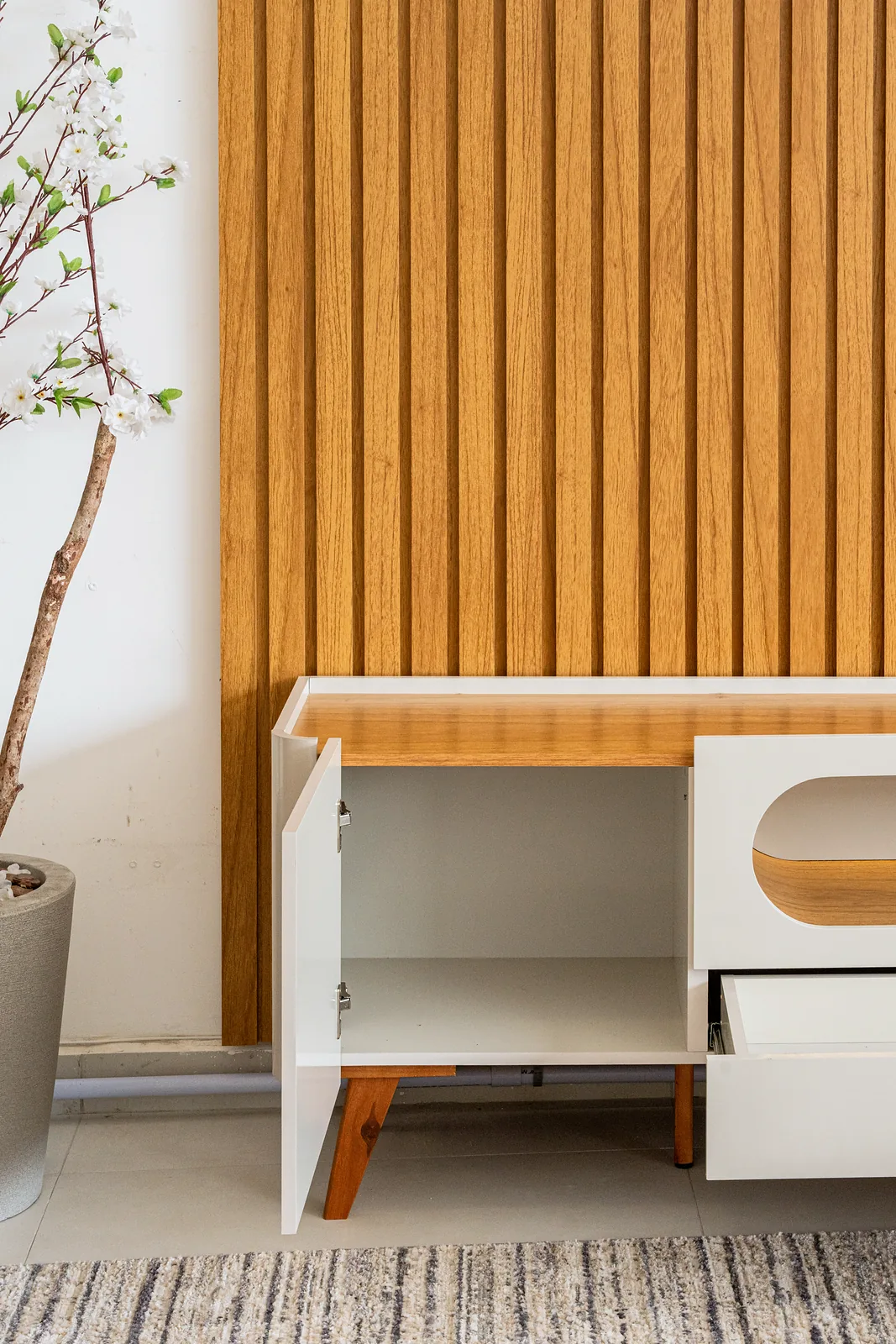
Lucy Home does not sell plants or pots. In the showroom, tall floor vases with branches stand beside armchairs and TV units, as in the photo above, and you can see that effect of height there.
Which large plants work indoors?
| Plant | Height in a pot | Light | For dogs and cats |
|---|---|---|---|
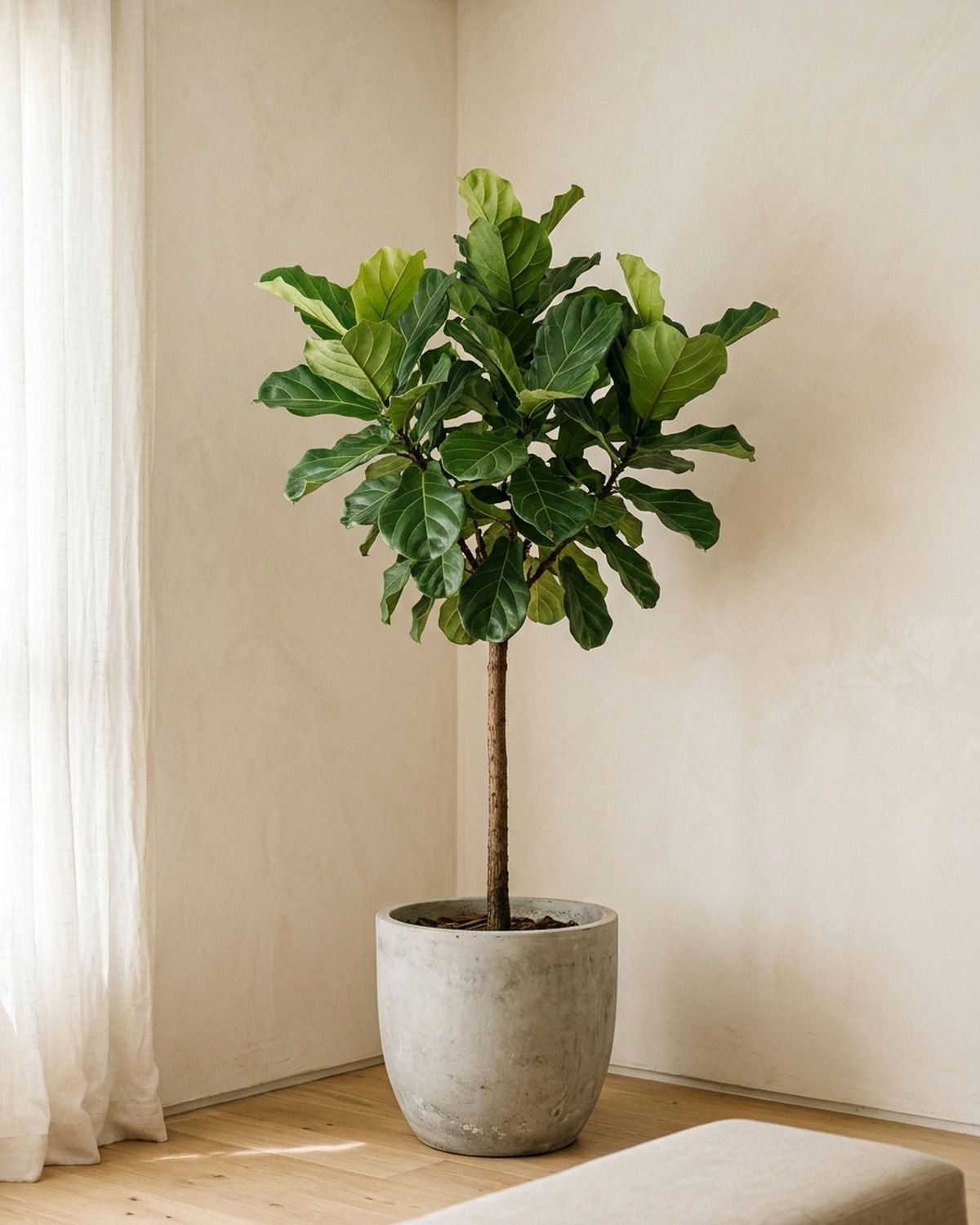
| Fiddle-leaf fig (Ficus lyrata) | 0.6 to 3 m | Bright indirect light or partial shade, no afternoon sun | Low toxicity (NC State) |
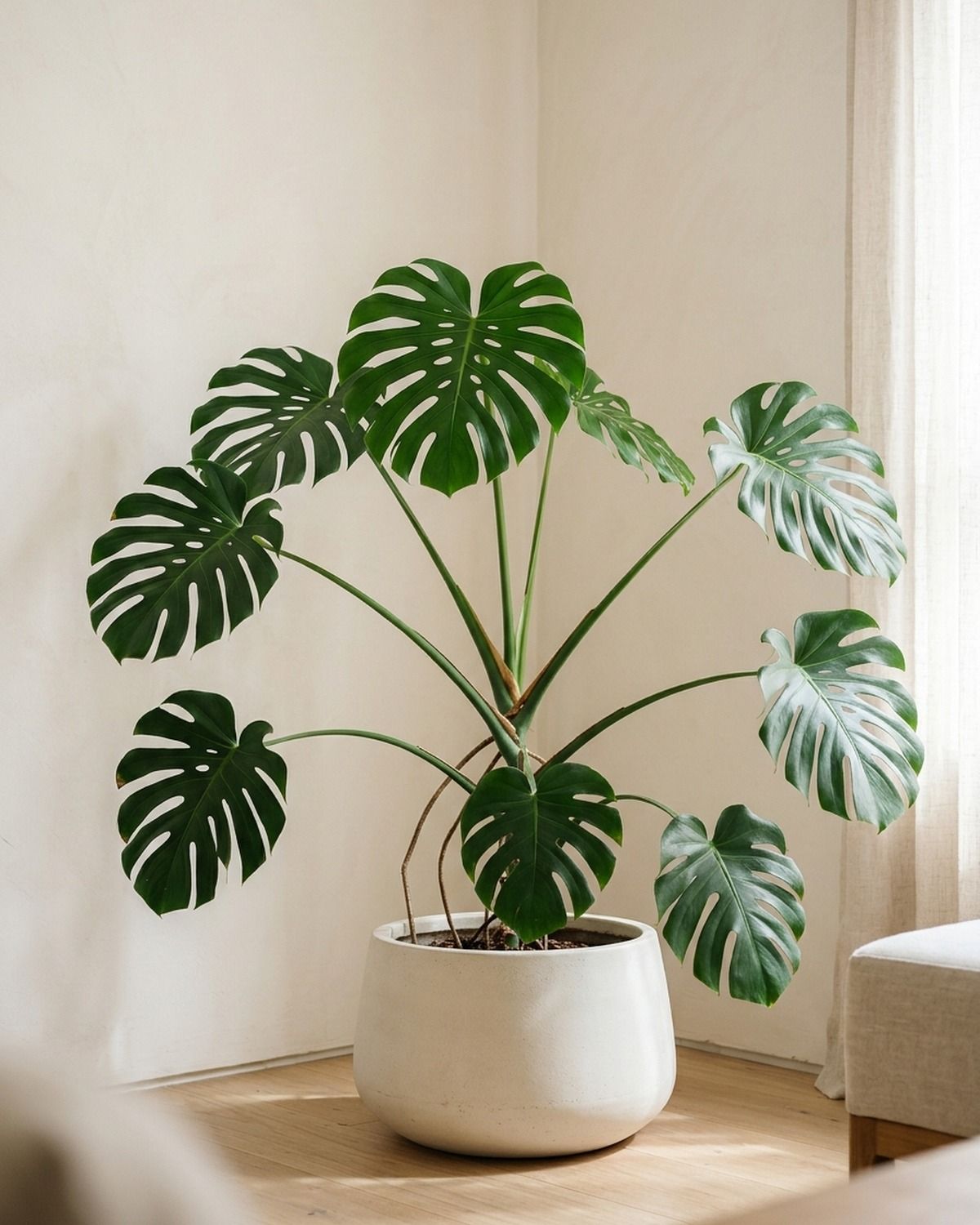
| Monstera, or Swiss cheese plant (Monstera deliciosa) | 1.8 to 2.4 m in most homes | Moderate brightness, no direct sun | Toxic (ASPCA) |
| Lady palm (Rhapis excelsa) | 1.2 to 3.6 m, slow growing | Indirect light; withstands deep shade | Non-toxic (ASPCA) |
| Areca palm (Dypsis lutescens) | Smaller in a pot than in the garden | Bright indirect light | Non-toxic (ASPCA) |
| Corn plant (Dracaena fragrans) | From 0.9 m | Filtered light, bright to moderate | Toxic if eaten (NC State) |
Heights and light come from North Carolina State University Extension (NC State) fact sheets. Toxicity comes from NC State and from the ASPCA, the American animal welfare organization.
What does each one need?
- Fiddle-leaf fig. Sensitive to overwatering: leaf drop can come from too much or too little water, says NC State. Brown spots appear near heating or cooling vents. There is more in the guide to plants that ask for extra care.
- Monstera. Water thoroughly and let the top quarter to third of the mix dry before watering again. The fact sheet warns that it needs sturdy support so the stems do not break. It spreads sideways: set aside width.
- Lady palm. Regular watering, reduced in winter, and low humidity needs, according to NC State. It is my pick for a corner with less light.
- Areca palm. Moist mix, never soggy, while it is growing. The fact sheet records that it is susceptible to scale insects, whiteflies and mites.
- Corn plant. Direct sun burns the foliage, and with too little light the leaves grow narrow, says NC State. It is sensitive to fluoride and to salt build-up in the water.
Where should it go in relation to the sofa and the armchair?
- In the corner that sees the window. Clemson University Extension points out that insufficient light results in poor growth.
- Out of the walkway. Between the sofa and the wall, behind the armchair, between the TV unit and the window. Circulation measurements are in the small living room guide.
- Above the backrest. The crown should rise above the sofa or the armchair, so it shows from anywhere in the room.
- A hand’s width of clearance between the leaves and the upholstery, so water and soil do not splash the fabric.
- Away from the air conditioner and from the balcony door where the wind blows in.
- One per room. In an apartment living room, a large plant is a focal point. Two compete.
Beside a reading armchair, the large plant closes the corner: armchair, lamp on one side, plant on the other. With a light sofa and a light wall, green becomes the color of the room, as I explain in the guide to colors in decorating.
And the ceiling height?
Measure before you buy. The plant needs clearance above the crown to grow and so the room does not feel cramped. A fiddle-leaf fig can reach 3 m in a pot: in an apartment, that is the ceiling. A slow-growing plant, such as the lady palm, means less pruning.
The pot for a large plant
A large plant is heavy, and a large wet pot even heavier. What I take care of:
- A deep, wide saucer, larger than the base of the pot, and emptied after watering.
- A base on casters, to move the pot away for cleaning without dragging it across the floor.
- Off the rug. I avoid a pot on a rug: moisture gets trapped underneath. See the guide to mold on the sofa and furniture.
- Repotting only when the roots form a solid mass around the root ball or come out of the hole, as Clemson University Extension advises. The new pot is 2.5 to 5 cm wider in diameter.
The proportion between pot, plant and furniture is in the guide to pots, cachepots and plant stands.
I want the effect, but I do not want to water
Do what the showroom does: a tall floor vase with branches. It gives the same vertical line, wants neither light nor water and works in a vacation apartment that stays closed.
See the proportion in person
At Lucy Home, at Avenida Presidente Kennedy, 3870, Aviação, Praia Grande, you see armchair, sofa and floor vase side by side and understand the proportion. The team helps you plan the room at no cost: message us on WhatsApp, send a photo of the corner with the wall measurement and the ceiling height, and we suggest the armchair or the sofa that pairs with the plant. You can also browse the armchairs and the armchair photos in the album.
Pieces mentioned in this article
- Ask about this model
Raven armchair
- Ask about this model
Maya armchair
- Ask about this model
Zara sofa
- Ask about this model
Majestic sofa
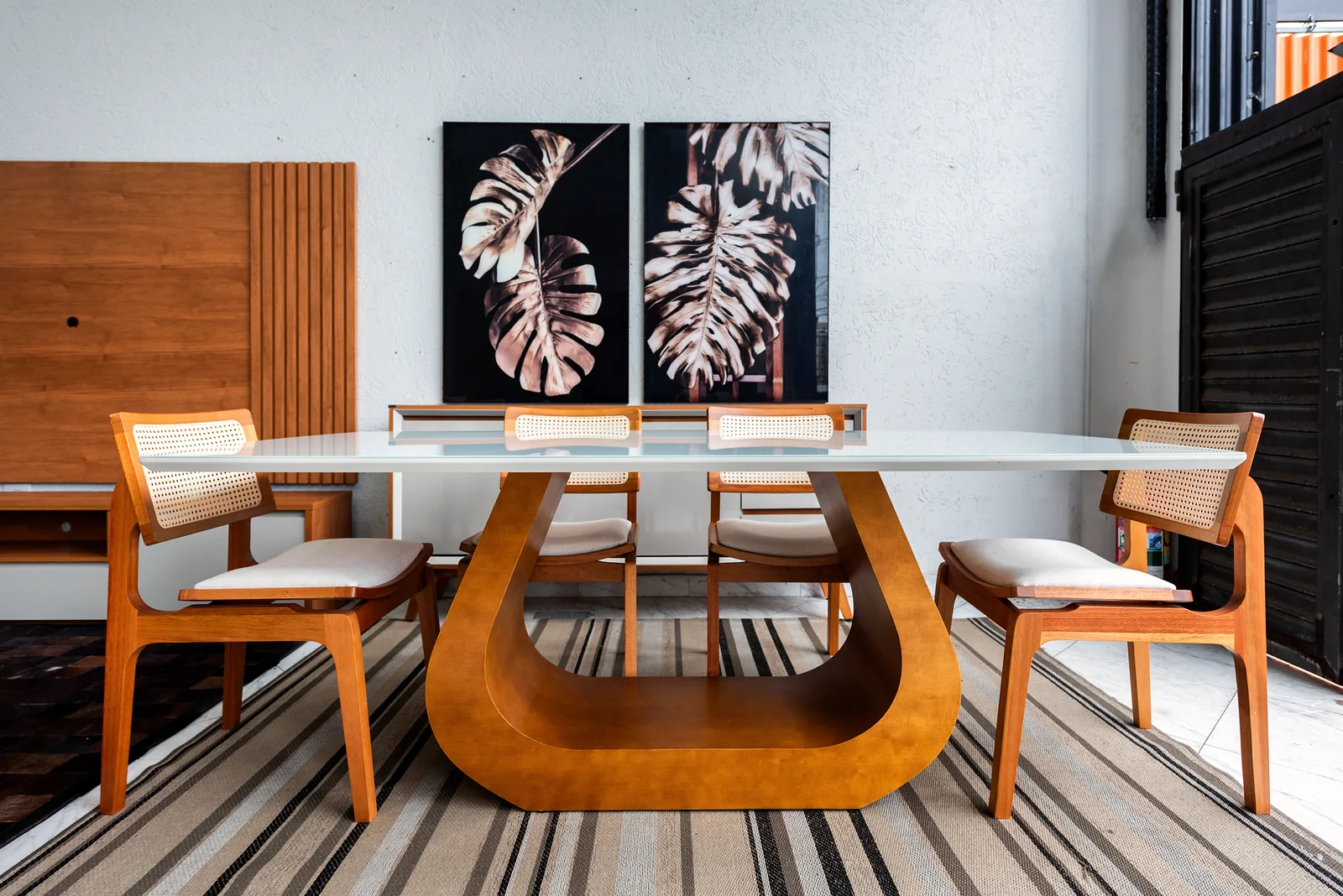
The furniture in this article, in Lucy Home photos
Plants mentioned in this article
-
Fiddle-leaf fig
Indoor plant to bring life to the room. -
Monstera
Indoor plant to bring life to the room. -
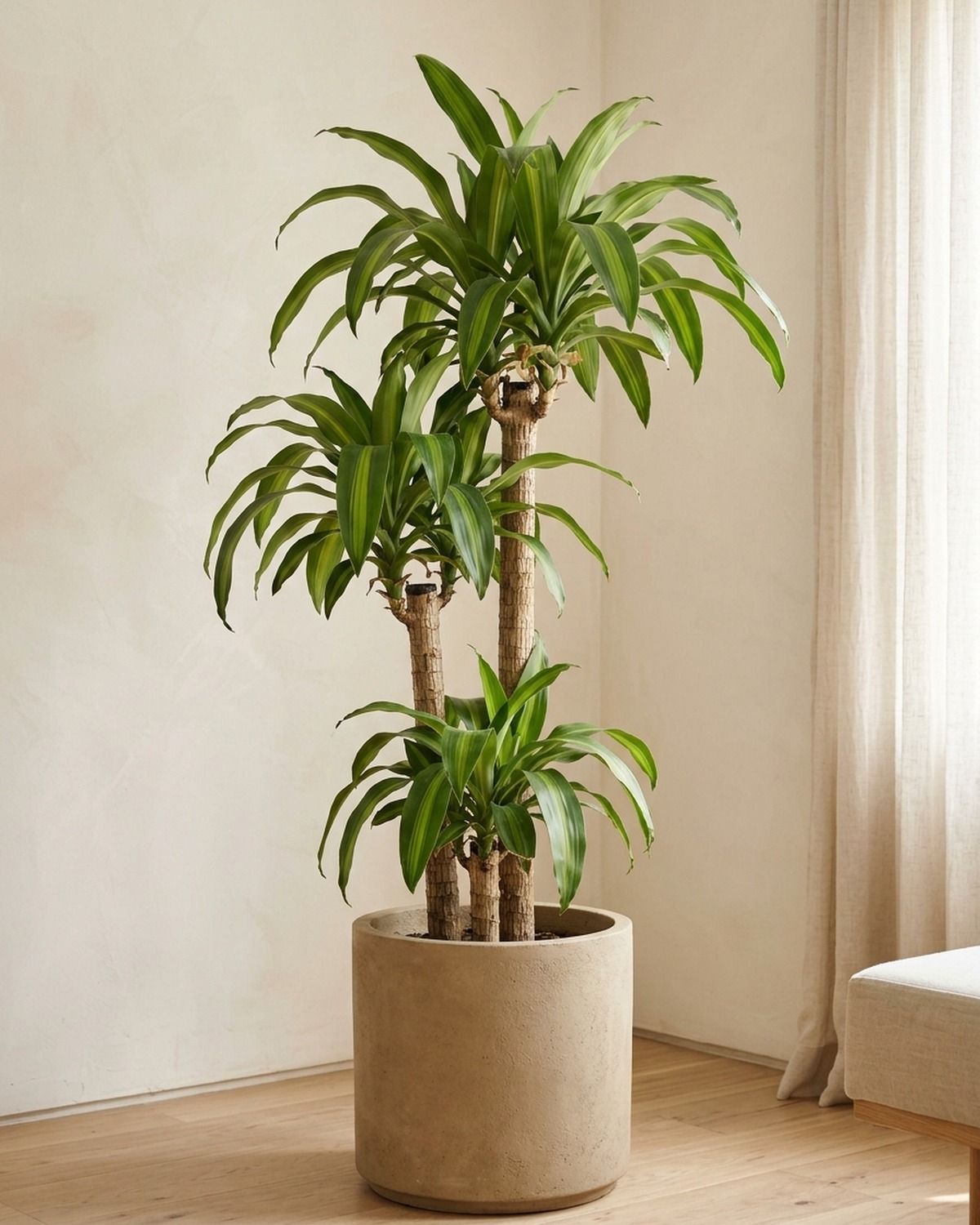
Corn plant
Indoor plant to bring life to the room.
Frequently asked questions
Which large plants are most used in living rooms?
Fiddle-leaf fig, monstera, lady palm, areca palm and corn plant. According to North Carolina State University Extension fact sheets, the fiddle-leaf fig grows from 0.6 to 3 m as a houseplant, and monstera stays between 1.8 and 2.4 m in most homes.
Does a large plant need a lot of light?
It depends on the species. The lady palm withstands deep shade, according to NC State. Fiddle-leaf fig, areca palm and monstera want bright indirect light or moderate brightness, with no strong direct sun. None of them lives in a corner without a window.
Where should I put a large plant in the living room?
In a corner that can see the window and is out of the walkway: beside the sofa, behind the armchair or between the TV unit and the wall. I leave a hand's width between the leaves and the upholstery and check the ceiling height before buying.
Which large plant is safe for dogs and cats?
The ASPCA lists the areca palm and the lady palm as non-toxic to dogs and cats. Monstera is toxic on the same list, and the corn plant and the fiddle-leaf fig have toxicity recorded in the NC State fact sheets.
How often should I repot a large plant?
When the roots form a solid mass around the root ball or come out of the drainage hole, according to Clemson University Extension. The new pot should be 2.5 to 5 cm wider in diameter than the current one.
Sources
- NC State Extension Plant Toolbox, Ficus lyrata
- NC State Extension Plant Toolbox, Monstera deliciosa
- NC State Extension Plant Toolbox, Rhapis excelsa
- NC State Extension Plant Toolbox, Dypsis lutescens
- NC State Extension Plant Toolbox, Dracaena fragrans
- ASPCA, Toxic and Non-Toxic Plants: Areca Palm
- ASPCA, Toxic and Non-Toxic Plants: Lady Palm
- ASPCA, Toxic and Non-Toxic Plants: Cutleaf Philodendron (Monstera deliciosa)
- Clemson Cooperative Extension, HGIC 1450: Indoor Plants, Cleaning, Fertilizing, Containers & Light Requirements
- Clemson Cooperative Extension, HGIC 1458: Indoor Plants, Transplanting & Repotting