Pots, cachepots and plant stands: size, proportion with the furniture and how to protect the wood
By Lucy Home. Published 15/11/2026, updated 15/11/2026.
A pot is where the plant lives: it has a hole in the bottom and holds the potting mix. A cachepot is the good-looking piece, with no hole, that hides the pot inside. The rule that protects the plant and the furniture at the same time is a single one: water has to leave the pot and cannot sit still, neither in the bottom of the cachepot nor on the top of the sideboard. The rest is proportion.
Lucy Home does not sell pots, cachepots or plants. The ones in the showroom photos are part of the decoration. What we do is plan the living room, and the pot enters that equation because it sits on or beside the furniture.
Pot or cachepot: which one do I use?
| Pot | Cachepot | |
|---|---|---|
| Hole in the bottom | Yes | No |
| Holds the potting mix | Yes | No: it holds the pot |
| Where I use it | Balcony, laundry area, floors that can get wet | Living room, bedroom, on top of furniture |
| Watering | In place, with a saucer | I take the pot out, water at the sink, return it dry |
Clemson University Extension advises that the plant’s container have a drainage hole and a tray to catch the excess. And the watering fact sheet from the same university says not to leave the plant standing in the water that drained. With a cachepot, that means: look at the bottom after watering.
What pot size?
For the plant, Clemson’s repotting fact sheet gives the measure:
- When to change: when the roots form a solid mass or come out of the drainage hole.
- How much bigger: a pot 2.5 to 5 cm wider in diameter. Do not jump to a much larger pot.
- No stones in the bottom: Clemson advises against a layer of rocks or clay pieces, because it slows the movement of water.
The cachepot follows: it needs to be a little wider and taller than the pot, so the pot goes in and comes out without a struggle.
Clay, glazed ceramic or plastic?
Clemson explains the difference that matters: a clay pot is porous and loses water through its walls, so it needs watering more often than a plastic or glazed one. For the living room, I translate it like this:
- Unglazed clay: great for a plant that dislikes a waterlogged mix. It stays damp on the outside and marks the top. It goes on the balcony floor or on a glazed saucer.
- Glazed ceramic: it does not sweat. It is my choice for the sideboard, the buffet and the TV unit.
- Plastic: light and discreet. It is the pot that goes inside the cachepot.
How do I get the proportion with the furniture right?
Here the rule is mine, from setting up living rooms:
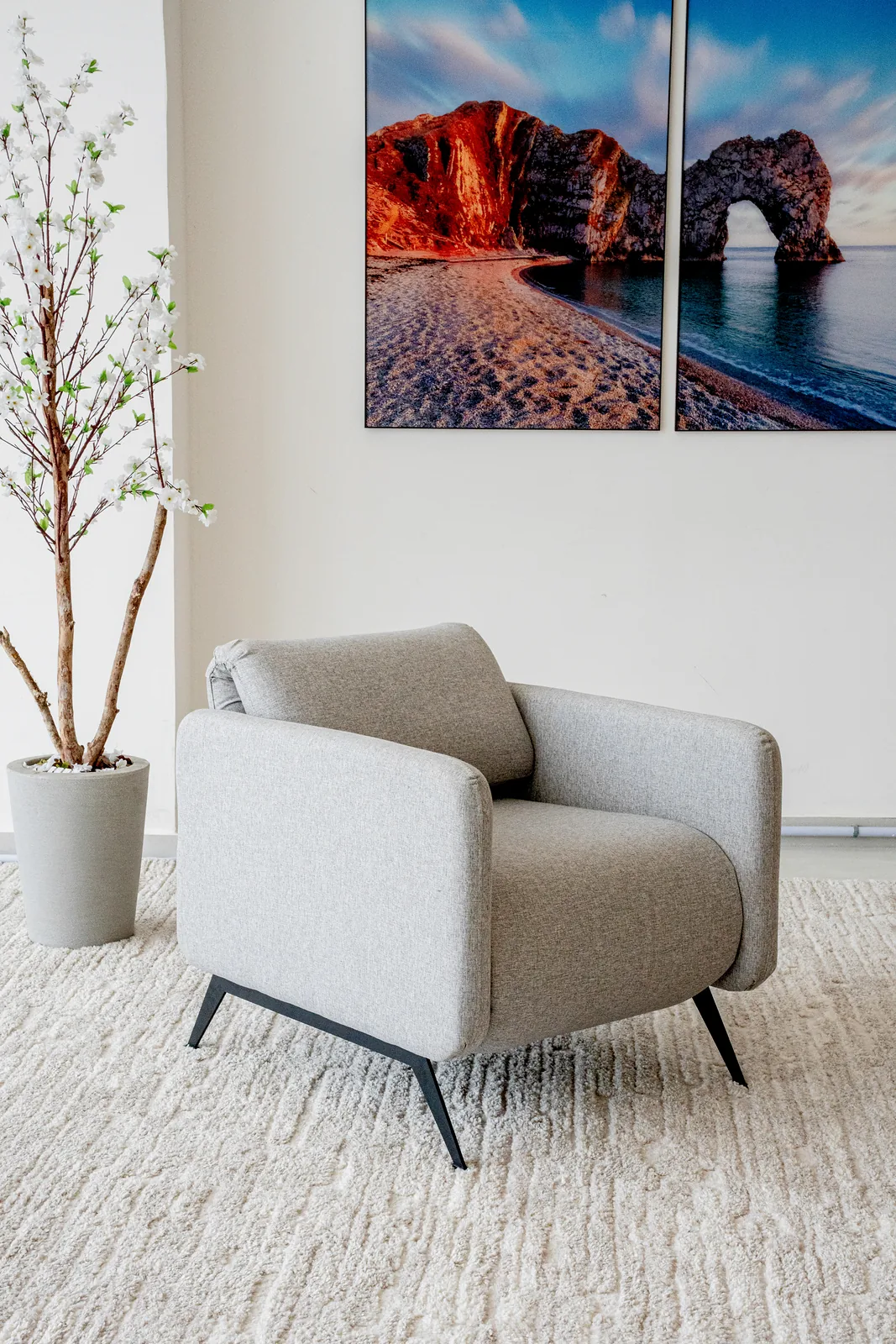
- Floor pot beside the sofa or the armchair: pot and plant together rise above the backrest, and the pot alone is about a third of that total height. A pot that is too tall with a short plant looks like a column.
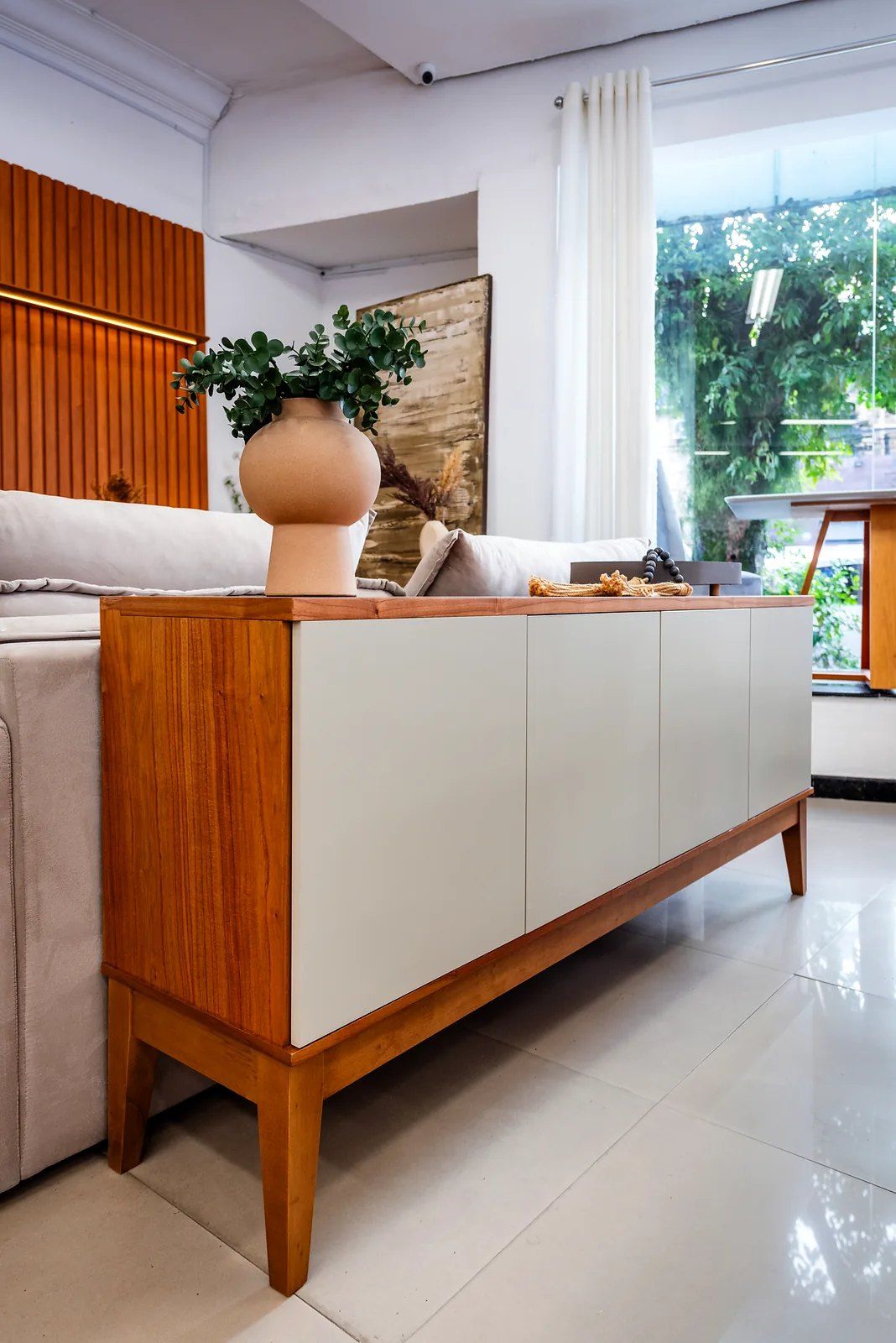
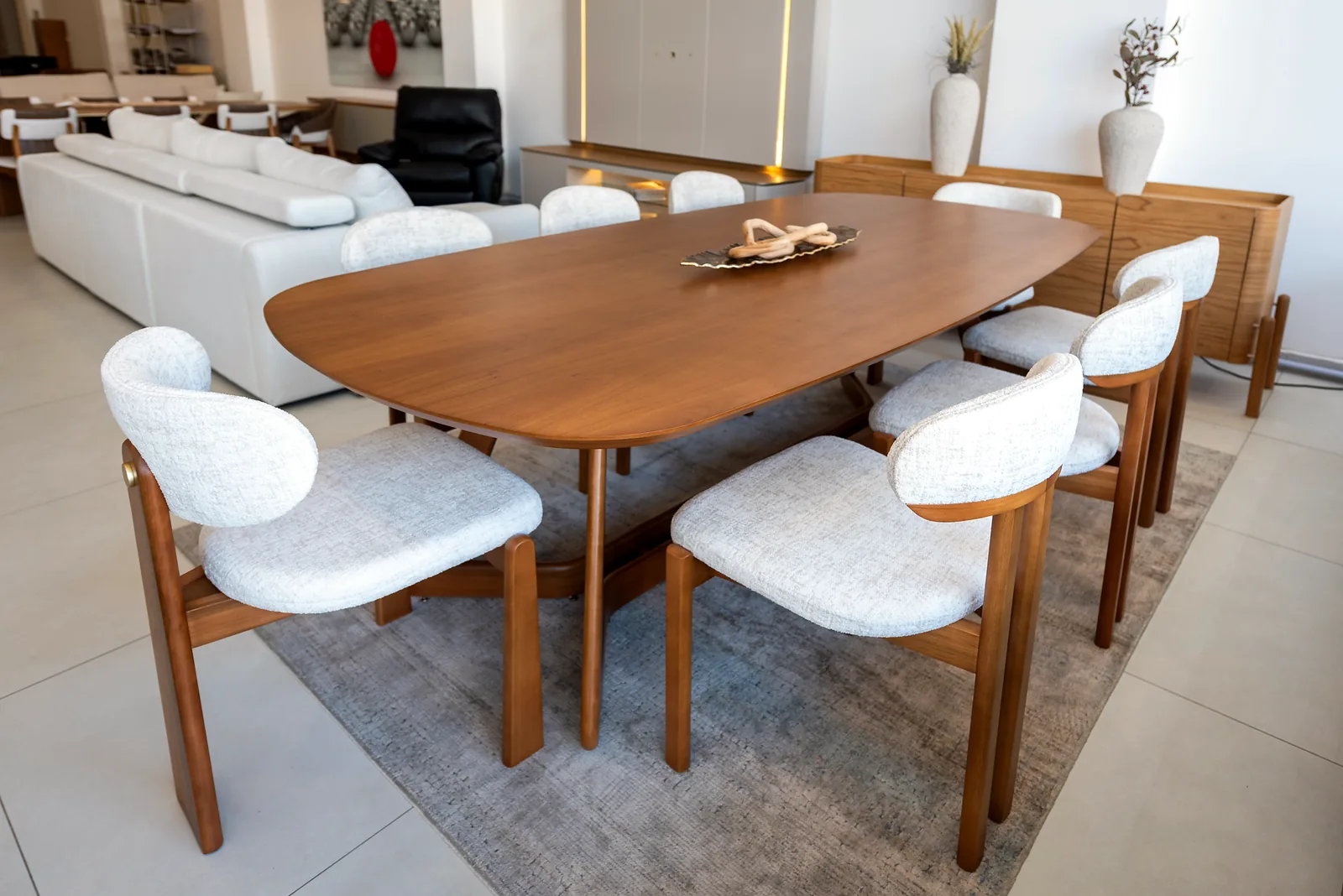
- Pot on a sideboard or buffet: it takes up to a third of the length of the top, and goes at the end when there is a centered mirror or painting. In the showroom photo, a ceramic vase with foliage does that on the buffet, behind the sofa.
- Pot on the side table: up to a third of the top. The table still has to hold a glass.
- Dining table centerpiece: low or narrow, so people can see each other.
- Repeat the material. Two or three pots in the same family of color and finish tie the room together. Every pot in a different style turns into a bazaar.
If the sideboard sits behind the sofa or in the entryway, see the guides to buffet or sideboard and to the sideboard in the entryway. The full composition is in the guide to plants in the living room.
And plant stands?
A stand gives height without a bigger pot:
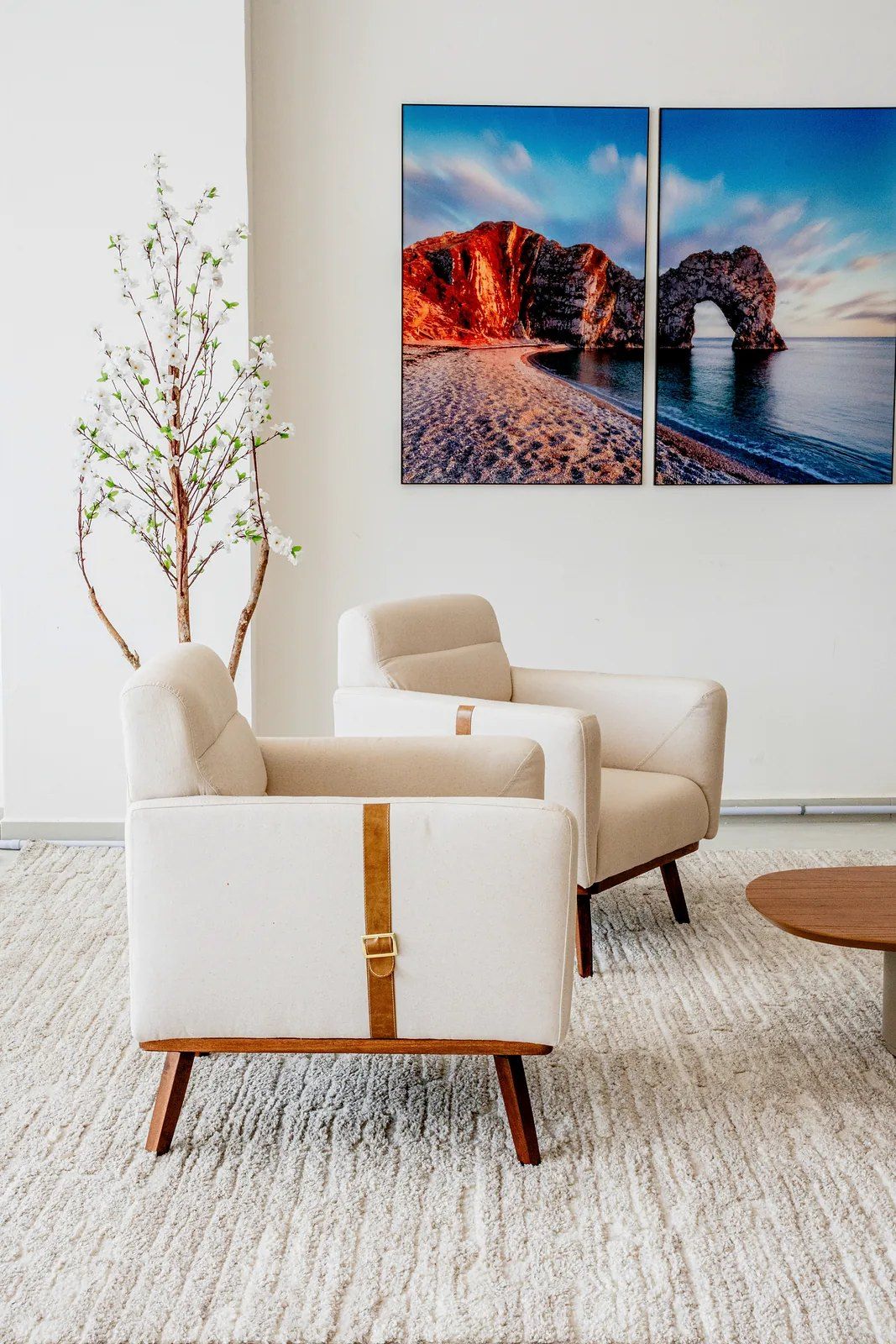
- Floor stand with legs: it lifts a medium plant to the height of the sofa arm and leaves the floor clear for cleaning. Check that it is stable, especially in a home with children and pets.
- Tall or hanging stand: good for ferns and pothos, which spill sideways. It goes near the window and out of the walkway.
- Fiber basket: it works as a cachepot. Since it does not hold water, it always goes with a saucer inside.
How do I protect wood, MDF and upholstery?
- Always a saucer or a cachepot. Never a pot with a hole directly on the top.
- Felt or cork under the saucer and the cachepot, to avoid scratches and to keep moisture away.
- Water at the sink every pot you can carry.
- Empty the saucer after watering, as Clemson advises.
- Move the pot now and then and look at the top underneath. A stain caught early can still be dealt with.
- A hand’s width between the foliage and the fabric of the sofa or armchair.
Wood and MDF react to water in different ways, as I explain in the guide to solid wood or MDF. In a beach house, the humidity in the air already weighs in: see the guide to mold on the sofa and furniture.
Send a photo of the corner
At Lucy Home, at Avenida Presidente Kennedy, 3870, Aviação, Praia Grande, the team helps you plan the room at no cost. Message us on WhatsApp and send a photo or the measurements of the wall: we suggest the sideboard, the buffet or the side table in the right proportion and tell you where the pot looks best. See the buffets and sideboards photos in the album and the buffets and sideboards category.
Pieces mentioned in this article
- Ask about this model
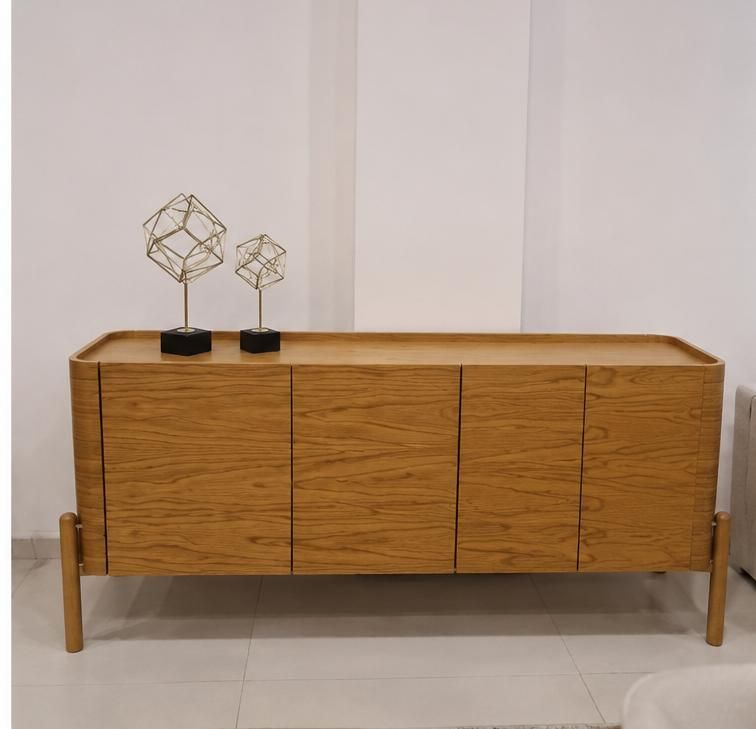
Damasco sideboard
- Ask about this model
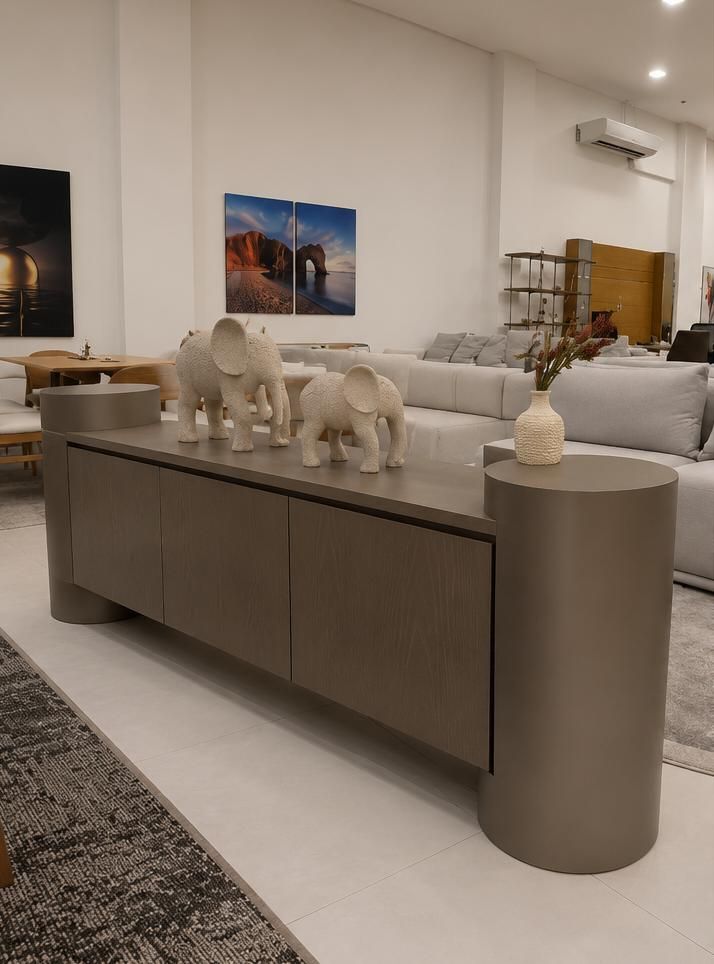
Platino sideboard
- Ask about this model
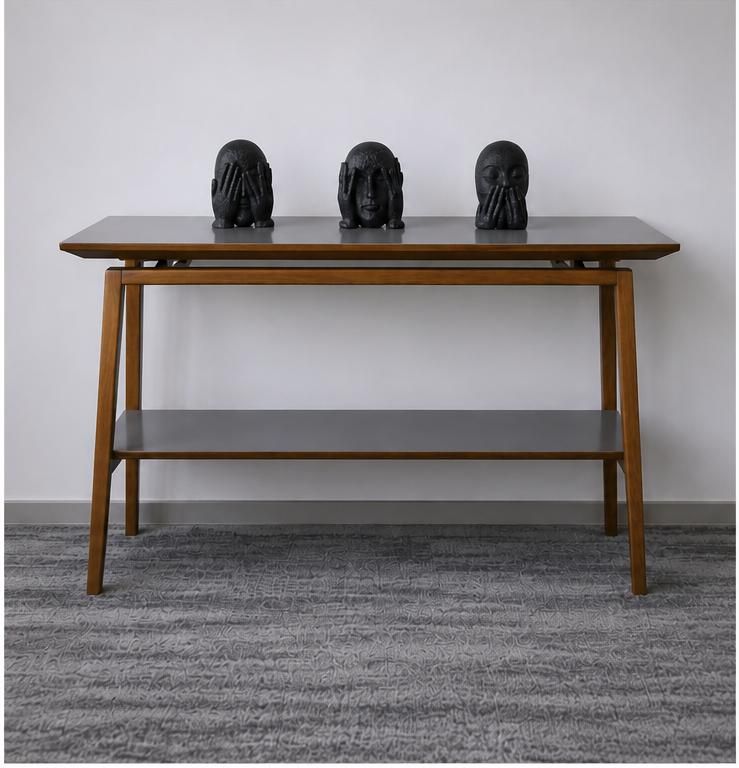
Cristal console table
Presentation image of the model.
- Ask about this model
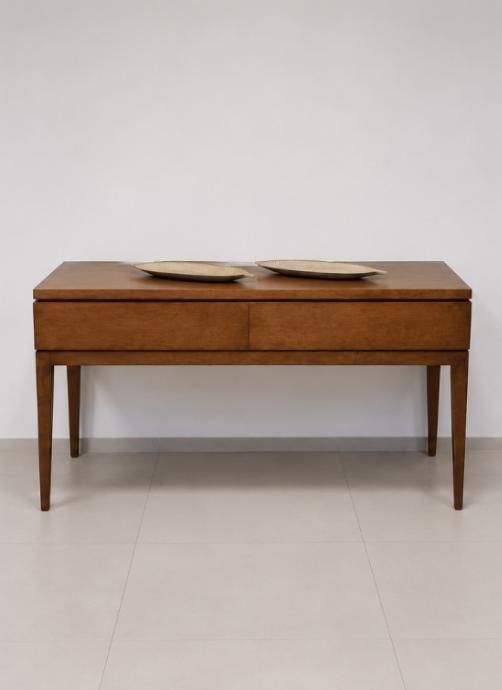
Linea console table
Presentation image of the model.
The furniture in this article, in Lucy Home photos
Frequently asked questions
What is the difference between a pot and a cachepot?
The pot has a hole in the bottom and holds the plant and the potting mix. The cachepot is the decorative piece, with no hole, that hides the pot inside. With a cachepot, I take the pot out to water and only put it back once it stops dripping.
What pot size should I choose when repotting?
Clemson University Extension advises moving to a pot 2.5 to 5 cm wider in diameter, when the roots form a solid mass or come out of the drainage hole.
Do I need to put stones in the bottom of the pot?
No. Clemson University Extension advises against a layer of rocks or clay pieces in the bottom of the pot, because it slows the movement of water. What the pot needs is a drainage hole and a saucer.
Clay pot or glazed pot?
Clay is porous, loses water through its walls and needs watering more often, according to Clemson. On furniture, I prefer a glazed pot or a cachepot, because damp clay marks the top.
Does Lucy Home sell pots and cachepots?
No. Lucy Home sells furniture. The vases in the showroom photos are part of the decoration. The team helps you plan the room at no cost, including where the pots go.