Balcony plants for the coast: what stands up to salt air, wind and strong sun
By Lucy Home. Published 15/11/2026, updated 15/11/2026.
A balcony on the coast needs plants that stand up to three things at once: salt, wind and strong sun. Not every species can. Hibiscus, bougainvillea, agave and yucca are among those with salt tolerance recorded by a university. Before choosing, check whether the balcony is open or glazed, how many hours of sun it gets and who uses it: some of the plants most resistant to salt air are toxic to pets and children.
Lucy Home does not sell plants or pots. This guide exists because a beautiful balcony is plant and furniture together, and both suffer from salt air. I did not find a reliable Brazilian list of ornamental plants for salt air, so I use the one from the University of Florida, which has a hot, humid coast, with a warning: confirm the species with a nursery in your area.
What does the coast do to a plant?
The University of Florida sums up the challenge of the coastal garden in three items: the winds, the inevitable salt and the sandy soil. And it gives two pieces of guidance:
- Distance from the sea. Plants within about one-eighth of a mile of the coast, roughly 200 m, should be at least somewhat salt tolerant.
- Tolerance varies. Salt-tolerant plants have different degrees of tolerance: choose and place them carefully.
The Royal Horticultural Society (RHS), in the United Kingdom, adds that strong winds, often laden with salt, are the challenge of planting in coastal gardens.
Which plants tolerate salt air?
| Plant | Salt tolerance | Sun | Watch out |
|---|---|---|---|
| Hibiscus (Hibiscus rosa-sinensis) | High (University of Florida) | Full sun, 6 hours or more, or partial shade | Roots always moist; needs protection from wind |
| Bougainvillea (Bougainvillea) | Moderate (University of Florida); tolerates drought, heat and salt (NC State) | Full sun | Has long thorns |
| Agave (Agave americana) | High | Full sun | Large spiny leaves; reaches 1.8 to 3 m |
| Yucca (Yucca) | High | Not in the source I read | Only salt tolerance was verified |
| Plumeria, or frangipani (Plumeria) | High | Not in the source I read | Only salt tolerance was verified |
| Sago palm (Cycas revoluta) | Tolerant (NC State) | Partial shade | Highly toxic to pets and children |
The tolerance column comes from the University of Florida list of salt-tolerant plants. Sun and notes come from the North Carolina State University Extension (NC State) fact sheets on hibiscus, bougainvillea, agave and sago palm.
In practice:
- Apartment balcony: hibiscus in a large pot and bougainvillea trained as a shrub in a container, a use the NC State fact sheet mentions.
- Yard and garden of a house: agave and yucca, which need space. NC State recommends choosing the site for agave carefully because of the large, spiny leaves: away from walkways and from where children play.
Which ones do I avoid in a home with pets and children?
Three plants that cope well with the coast have a serious toxicity problem:
- Sago palm. The ASPCA, the American animal welfare organization, lists it as toxic to dogs, cats and horses, with signs that range from vomiting to liver failure and death. NC State rates the severity as high, records that animals are attracted to the plant and flags it as a problem for children.
- Oleander (Nerium oleander). The University of Florida itself warns: it is tolerant, but highly toxic. It is on the toxic plant list of Sinitox, at Fiocruz, the Brazilian public health foundation.
- Crown of thorns (Euphorbia milii). High salt tolerance according to the University of Florida, and also on the Sinitox list.
The guide to plants toxic to dogs, cats and children has the full table, including indoor plants.
How do I protect them from the wind?
For coastal gardens, the RHS recommends a screen that filters the wind, made of trees or shrubs, and advises against solid structures such as walls and closed fences. The University of Florida also talks about creating wind screens with fences, sturdy shrubs or groups of trees. On an apartment balcony, I adapt it like this:
- A trellis or mesh on the side the wind comes from, instead of closing it off completely.
- Low, heavy pots, in ceramic or concrete. A tall plant in a light pot tips over.
- Plants in a group, the toughest on the outside, sheltering the others.
- Nothing hanging loose at the edge of a balcony on a high floor.
And the sun?
Full sun, in the NC State fact sheets, means six hours or more of direct sun a day. In Brazil, a north-facing balcony gets the most sun through the day; a west-facing one gets the strong afternoon sun; an east-facing one gets morning sun; and a south-facing one gets little direct sun. A south-facing balcony will not keep a hibiscus in bloom.
A glazed balcony is another case: with no wind and no direct salt, it behaves like a very bright interior. There, the guides to plants in the living room and to plants that ask for extra care apply.
Plants and balcony furniture: how do they get along?
Salt air attacks the metal in furniture first, as I explain in the guide to salt air and furniture. The plant adds water to the equation:
- A saucer under every pot, emptied after watering. Standing water on the floor, under table and chair legs, does the most damage.
- Pots away from furniture legs and out of the path of anyone pulling out a chair.
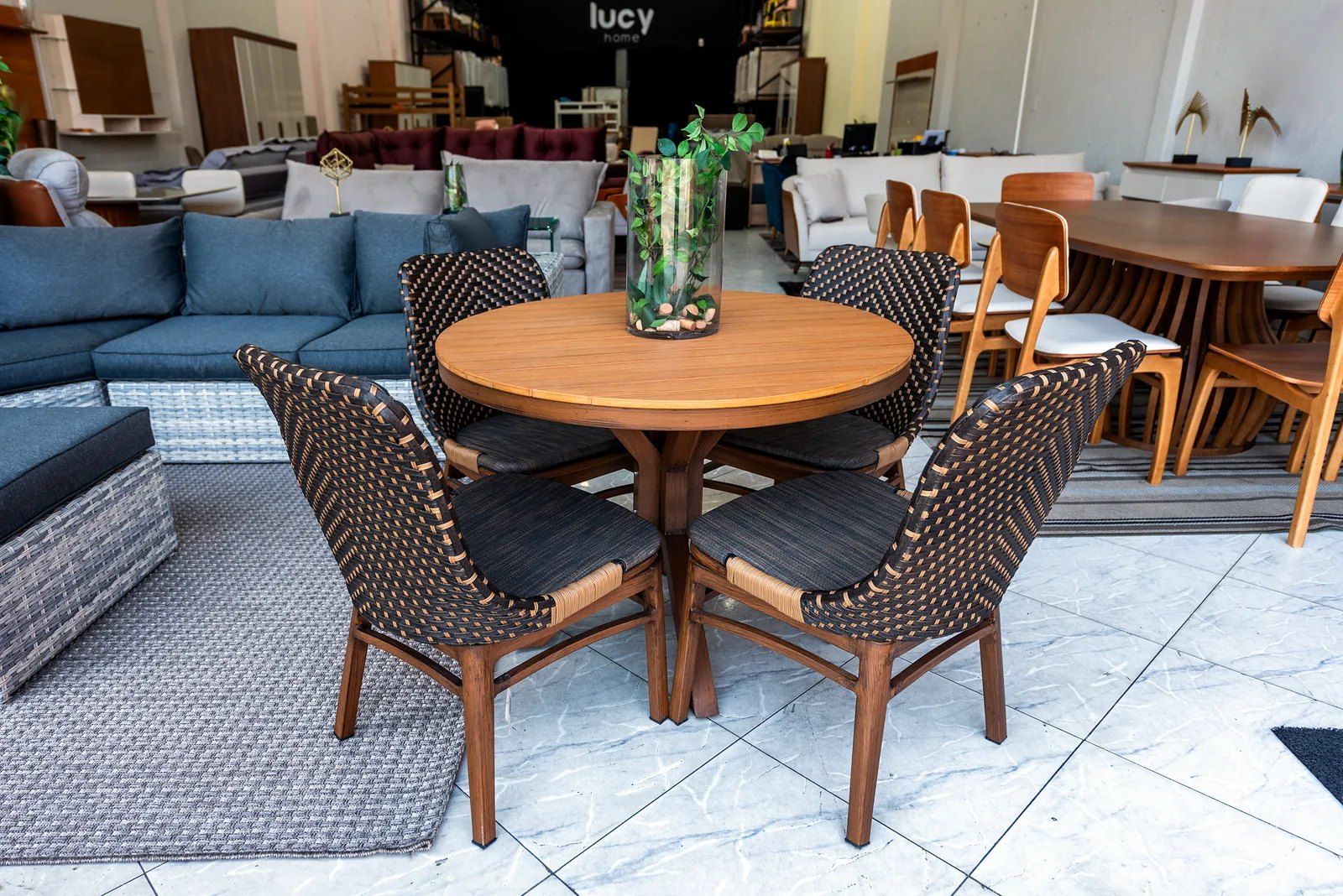
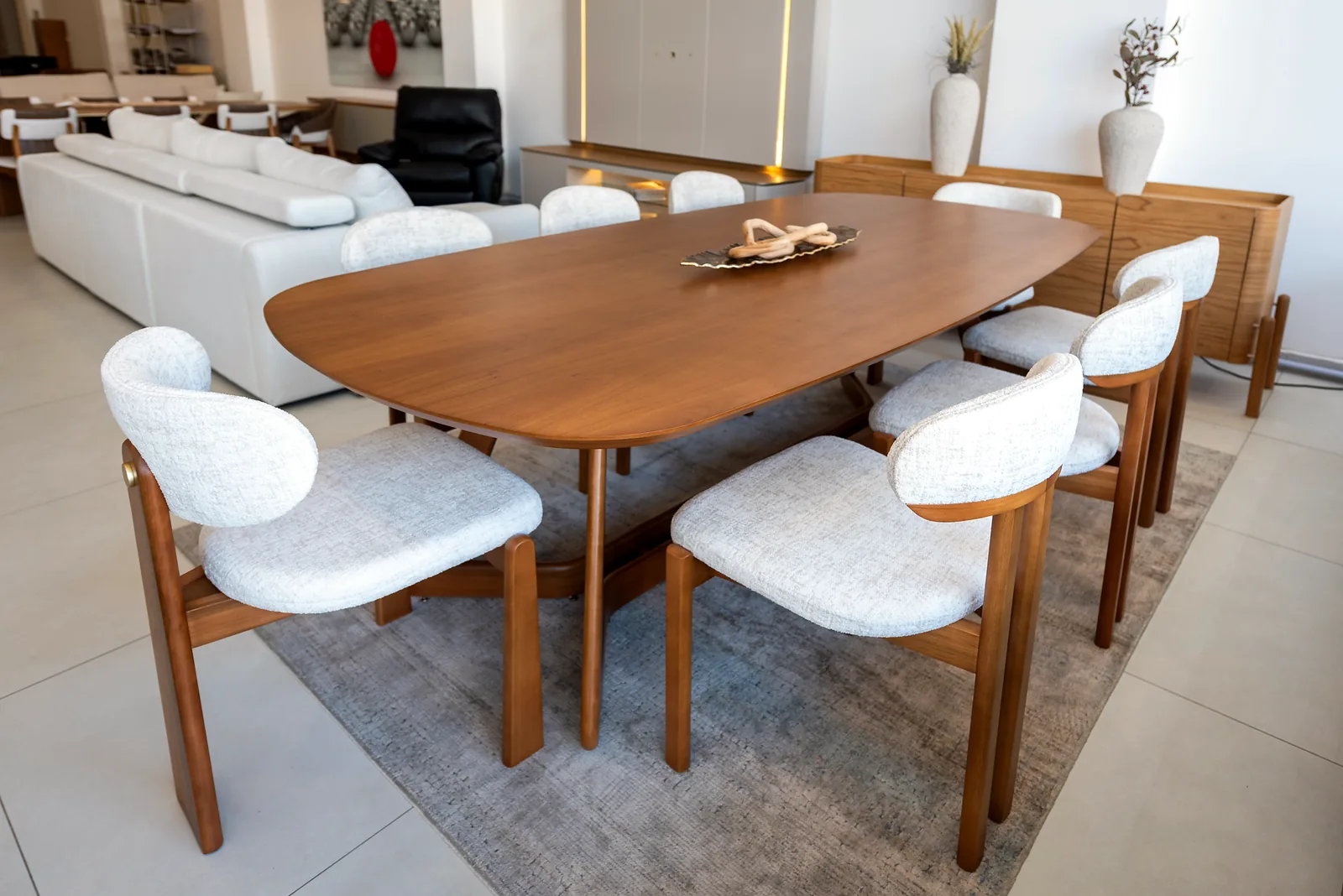
- A centerpiece on the table in a low, stable vase, as in the showroom photo. When it is windy, a tall glass vase stays indoors.
- Cushions and upholstery away from the watering. If they get wet, dry them the same day.
What lasts in an open area is in the guide to furniture that lasts on the coast, and beach house decor shows how green enters the palette.
Plan the whole balcony
At Lucy Home, at Avenida Presidente Kennedy, 3870, Aviação, Praia Grande, the team helps you plan the room at no cost. Message us on WhatsApp, send the balcony measurements, tell us which way it faces and whether it is glazed: we suggest table, chairs and armchairs and where the pots can go without getting in the way. See the outdoor area photos in the album to picture the set on your balcony.
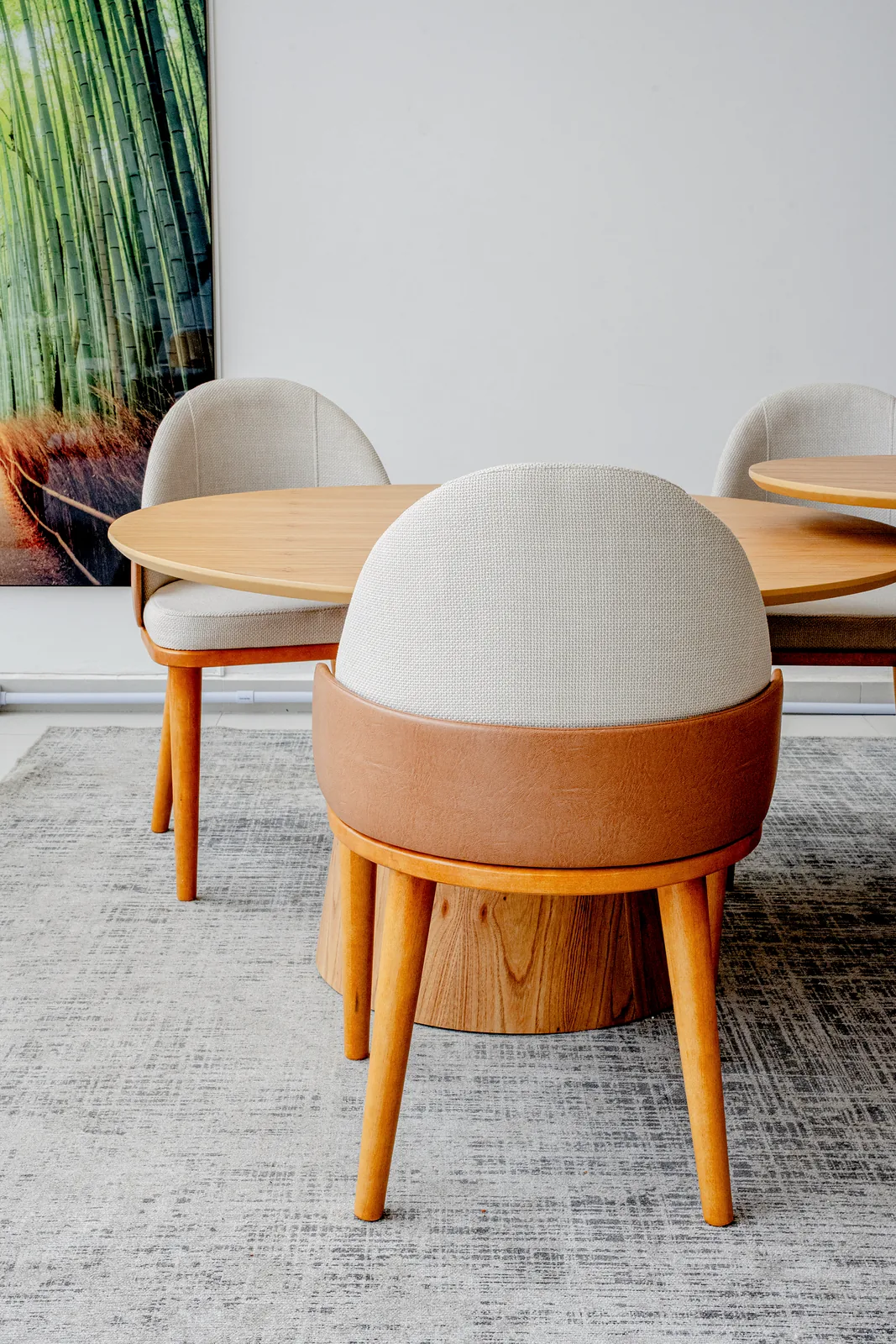
The furniture in this article, in Lucy Home photos
Frequently asked questions
Which plants tolerate salt air?
The University of Florida lists as highly salt tolerant, among others, hibiscus, agaves, yucca, plumeria and crown of thorns, and rates bougainvillea as moderately tolerant. The list was made for the Florida coast; confirm the species with a local nursery.
How far from the sea does salt affect plants?
The University of Florida advises that plants within about one-eighth of a mile of a saltwater coast, roughly 200 m, should be at least somewhat salt tolerant. It also points out that tolerance varies from species to species.
How do I protect balcony plants from the wind?
By filtering the wind, not blocking it. The Royal Horticultural Society recommends, for coastal gardens, a screen of trees or shrubs that filters the wind rather than solid structures. On a balcony, I adapt that with a trellis or mesh and low, heavy pots.
Which coastal plants are dangerous for pets and children?
The sago palm is the most serious: the ASPCA lists it as toxic to dogs, cats and horses, with a risk of liver failure and death. Oleander and crown of thorns, which tolerate salt, are on the toxic plant list of Sinitox, at Fiocruz, in Brazil.
Does Lucy Home sell plants or pots for the balcony?
No. Lucy Home sells furniture. The album on the site has photos of outdoor sets from the showroom; for models and availability, ask on WhatsApp.
Sources
- UF/IFAS Gardening Solutions (University of Florida), Salt-Tolerant Plants
- UF/IFAS Gardening Solutions (University of Florida), Coastal Landscapes
- Royal Horticultural Society (RHS), Plants for coastal areas
- NC State Extension Plant Toolbox, Hibiscus rosa-sinensis
- NC State Extension Plant Toolbox, Bougainvillea
- NC State Extension Plant Toolbox, Agave americana
- NC State Extension Plant Toolbox, Cycas revoluta
- ASPCA, Toxic and Non-Toxic Plants: Sago Palm
- Sinitox (Icict/Fiocruz, Brazil), photo list of toxic plants (in Portuguese)